Sample story
Clemmie Bean and the Carrot
The story of a dog who stopped waiting by the door
A sample story. The photos show a real dog, shared freely by the photographer; the memories were written for this example. Your story is made only from what you tell us about your dog.
Made from these photos

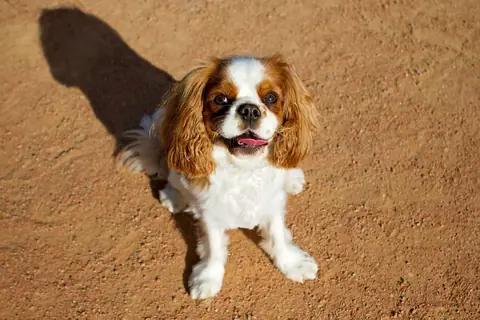
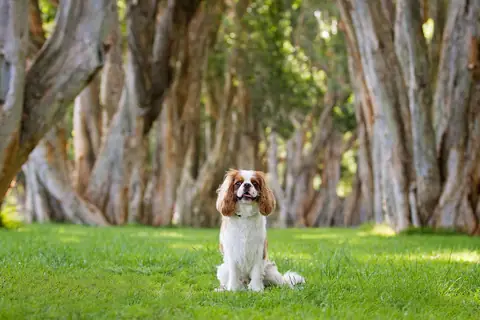




Photo: Courtney Mihaka / Unsplash
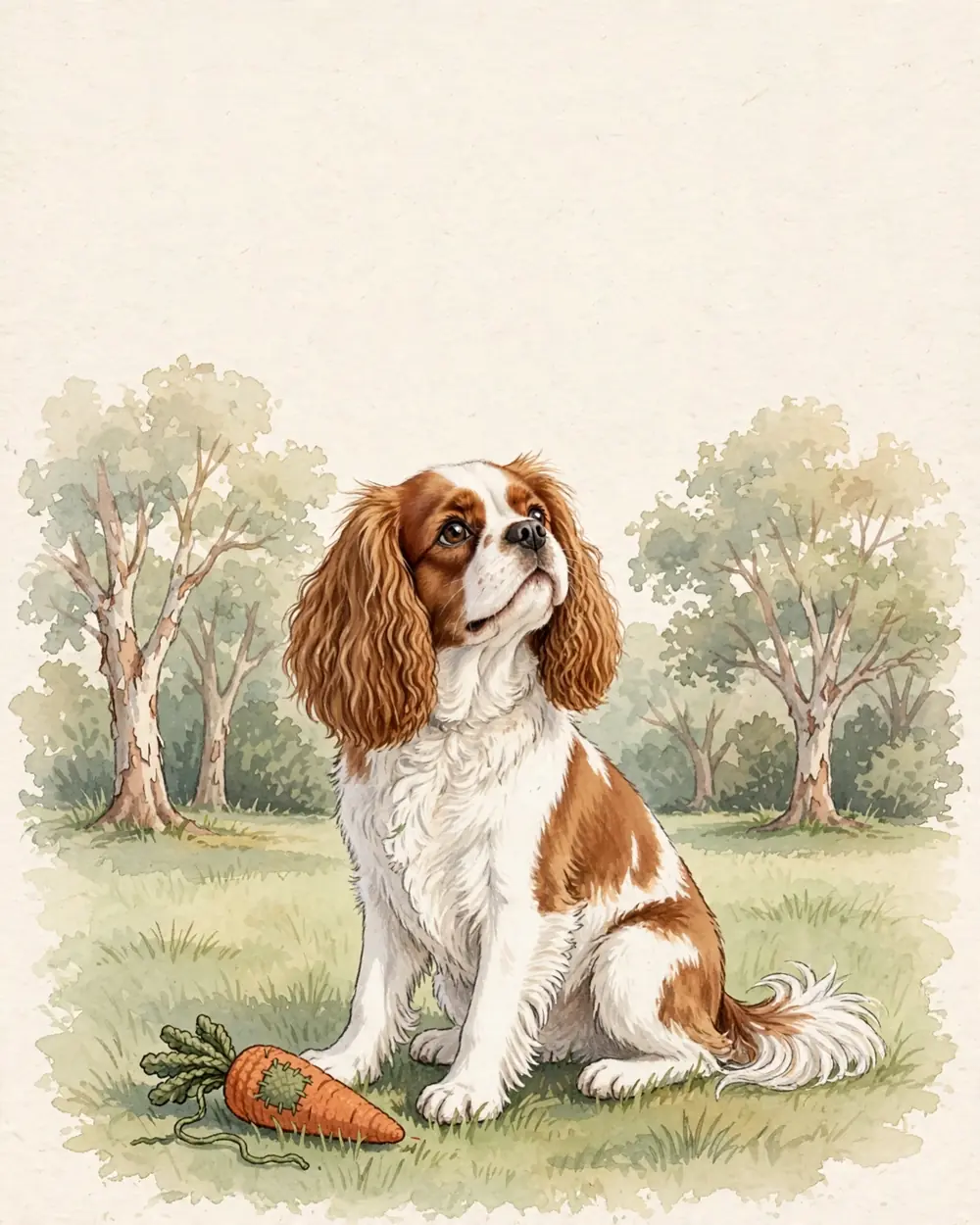
A Furhaps Keepsake Story
Dedication
For Hannah, who gave up her grey jumper on the sofa, and for Tom, who lets me follow him to breakfast. Both of you are mine. — Clemmie
Chapter One The Rainy Saturday in March
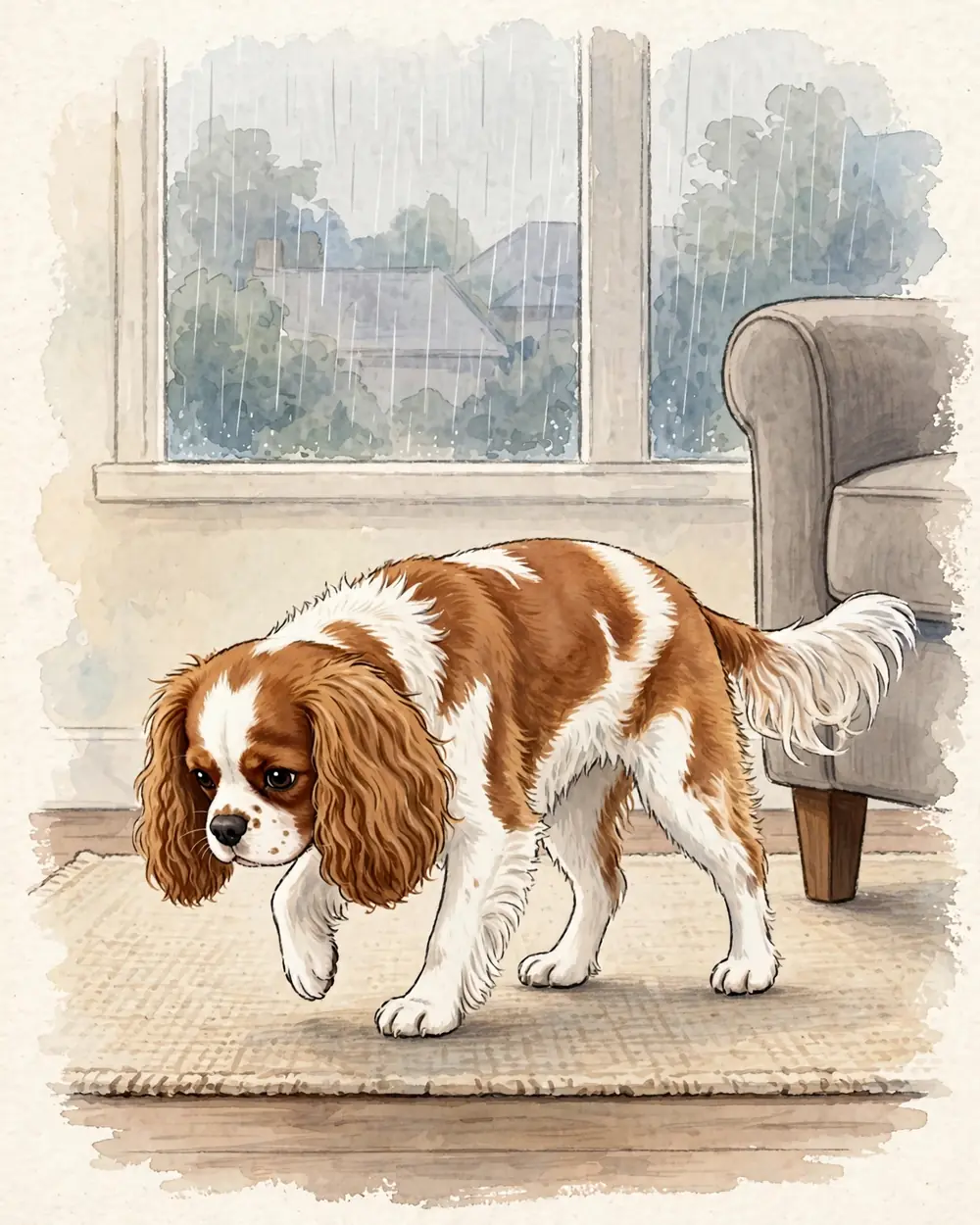
She began the inspection. Very slowly, nose to the floor, through every room, sniffing as she went. Slow is careful, she told herself, and careful is how you find the doors. Two years old is old enough to check a whole house.
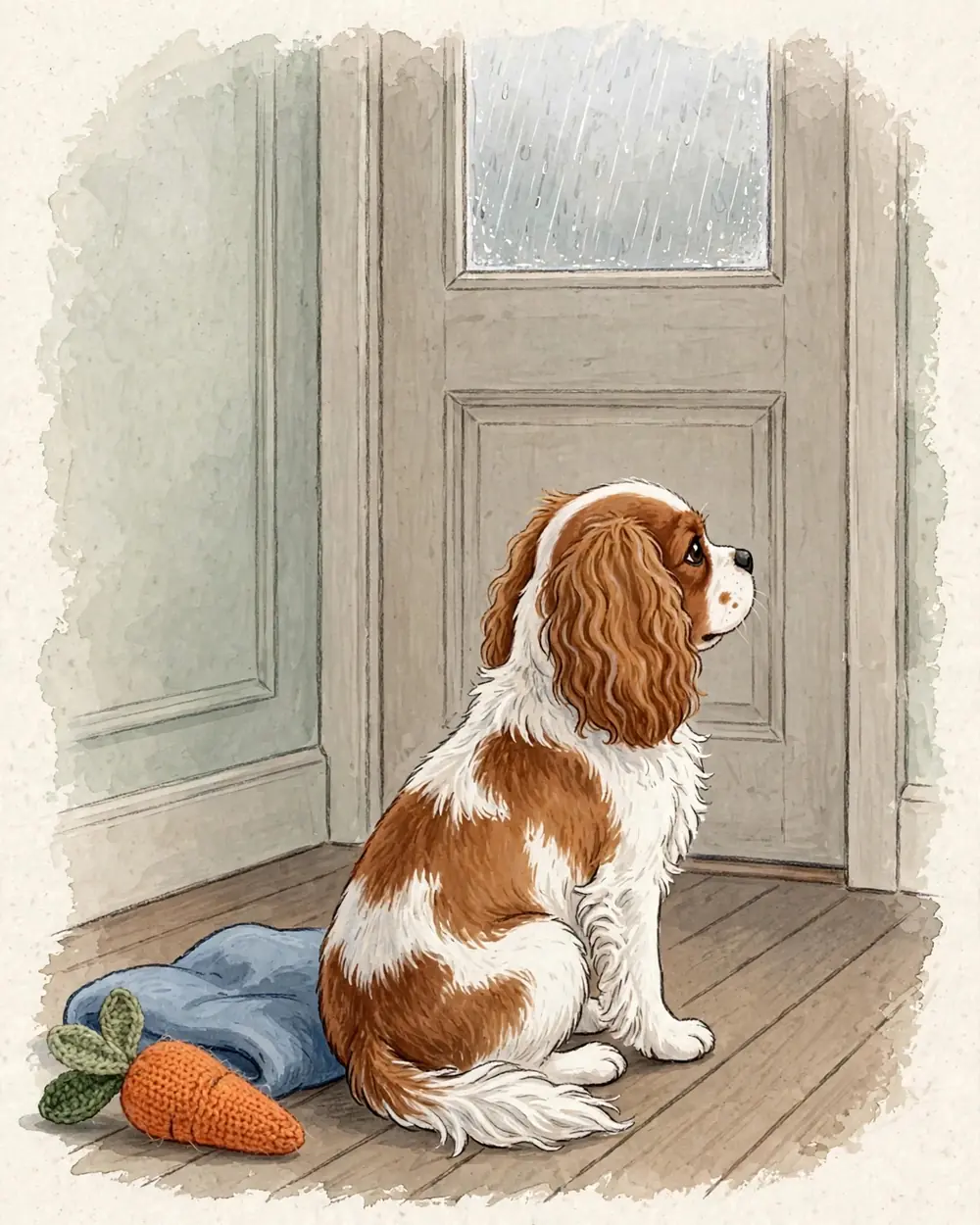
When every room had been checked, she went to the front door and sat down facing it — back straight, ears forward, the picture of a dog expecting somebody. Someone is coming, she thought. That is what doors are for.
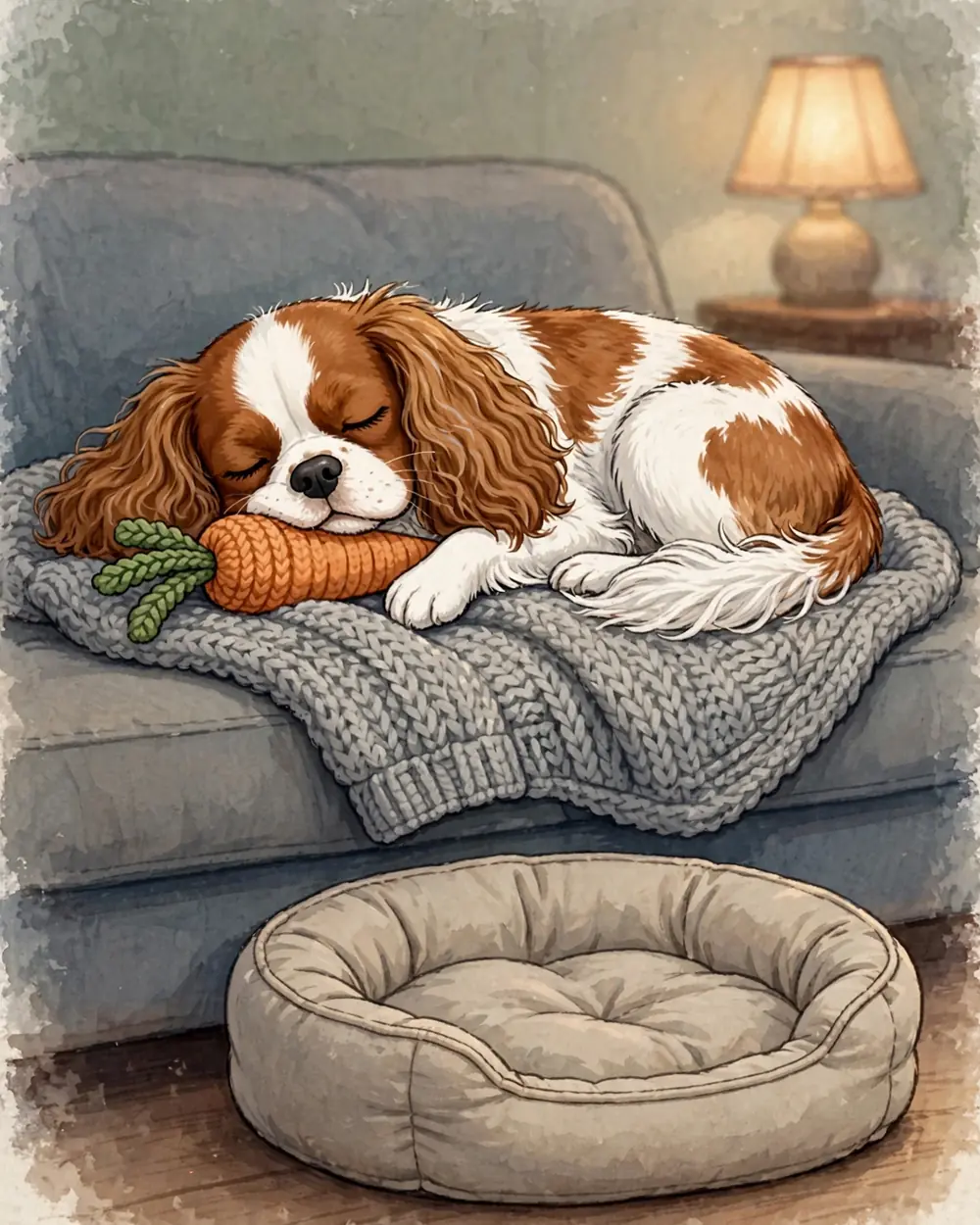
They had bought her a bed. She ignored it completely and slept on the sofa instead, on Hannah's old grey jumper, with the carrot tucked under her chin. Just in case, she thought. In case somebody comes back for it. The rain went on through the night.
Chapter Two The Eighth Evening
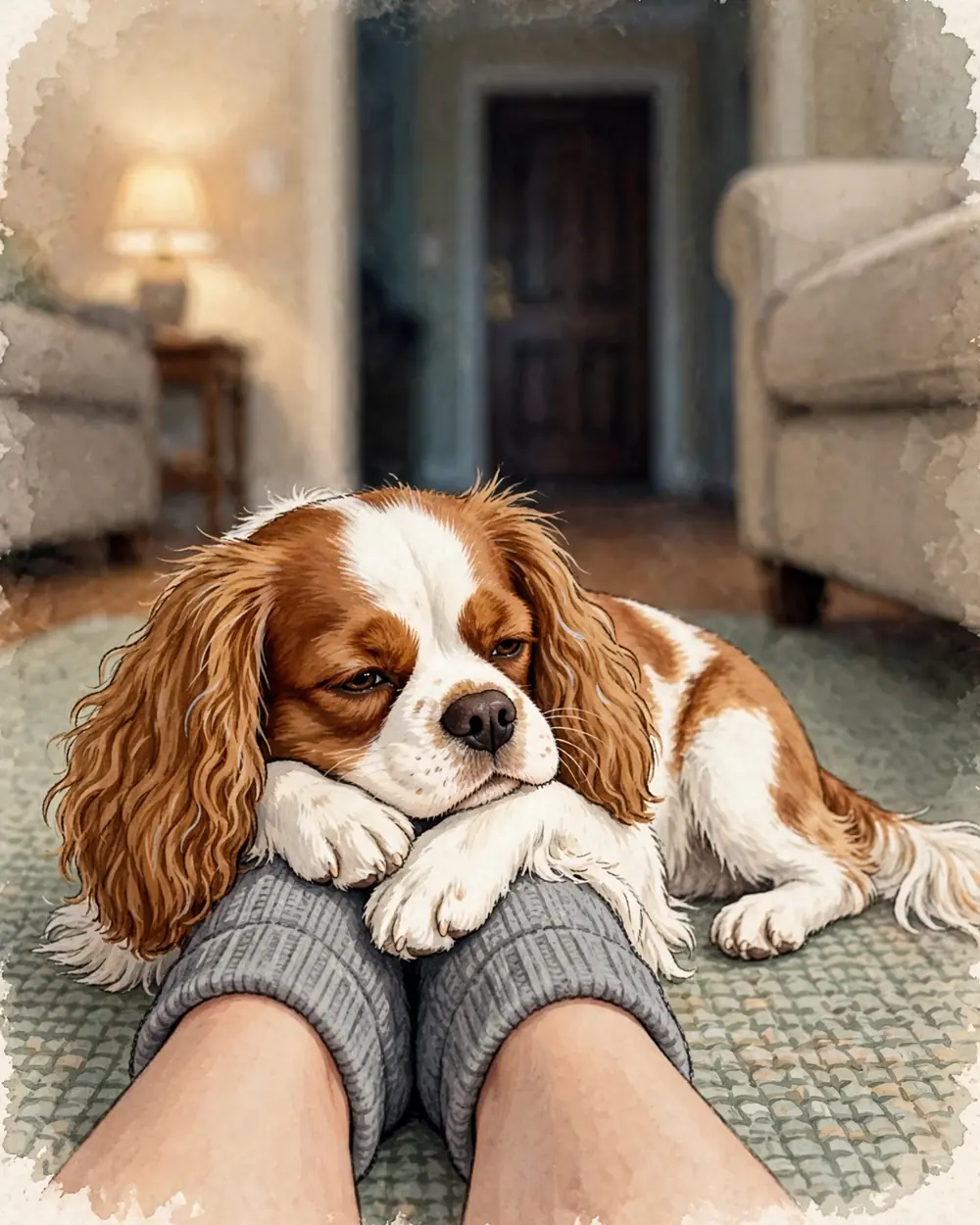
For a whole week she sat at the front door every evening, facing it. On the eighth evening she got up, crossed the room, and lay down across Hannah's feet instead. She has done it every evening since. Right, she thought. This is the arrangement, then.
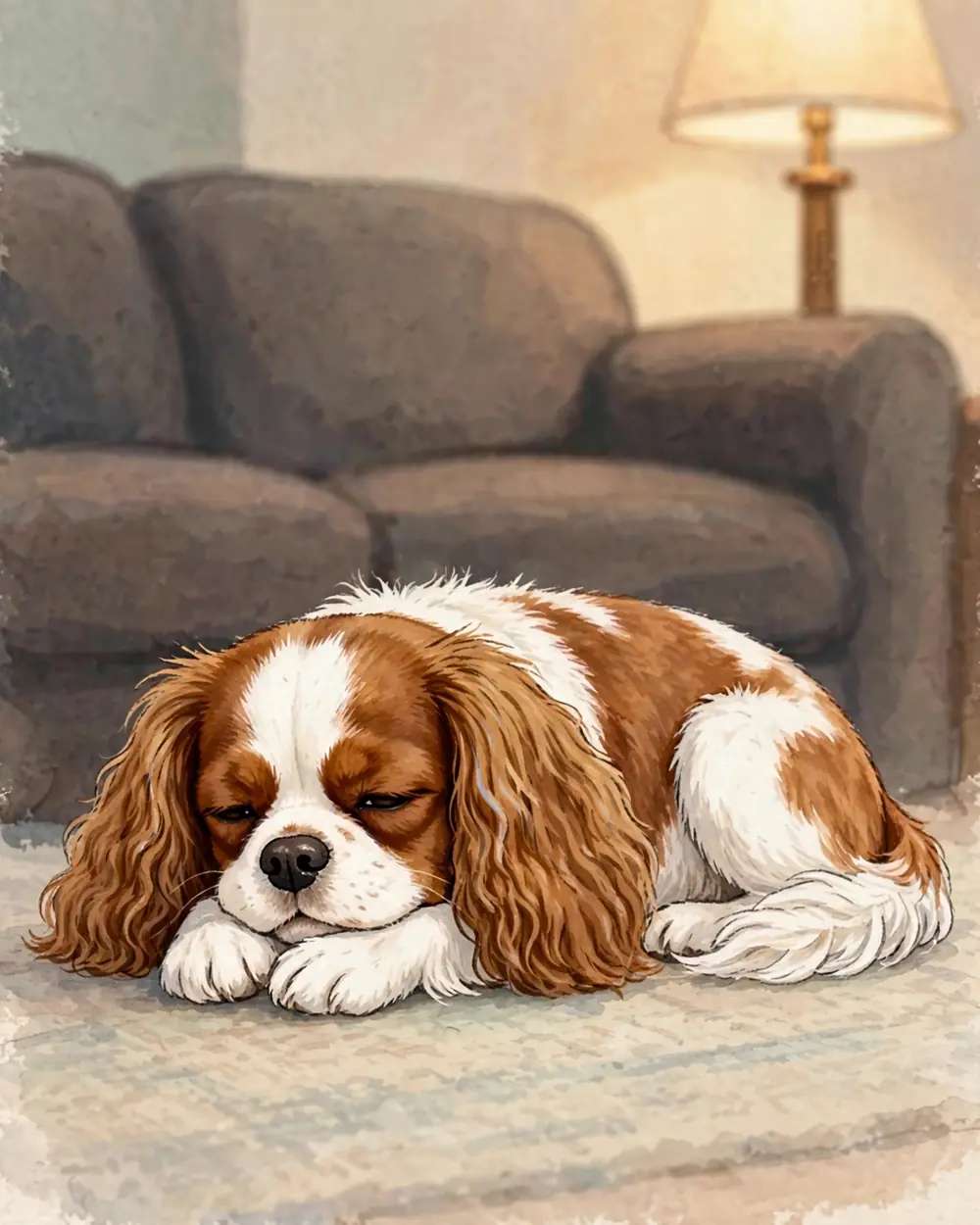
By then they had begun using the names. Most days she is Clemmie. When she is warm and sleepy she is Clemmie Bean — which she regards not as a joke but as a straightforward description of her condition. The condition is upon her.
Chapter Three Every Person on the Path
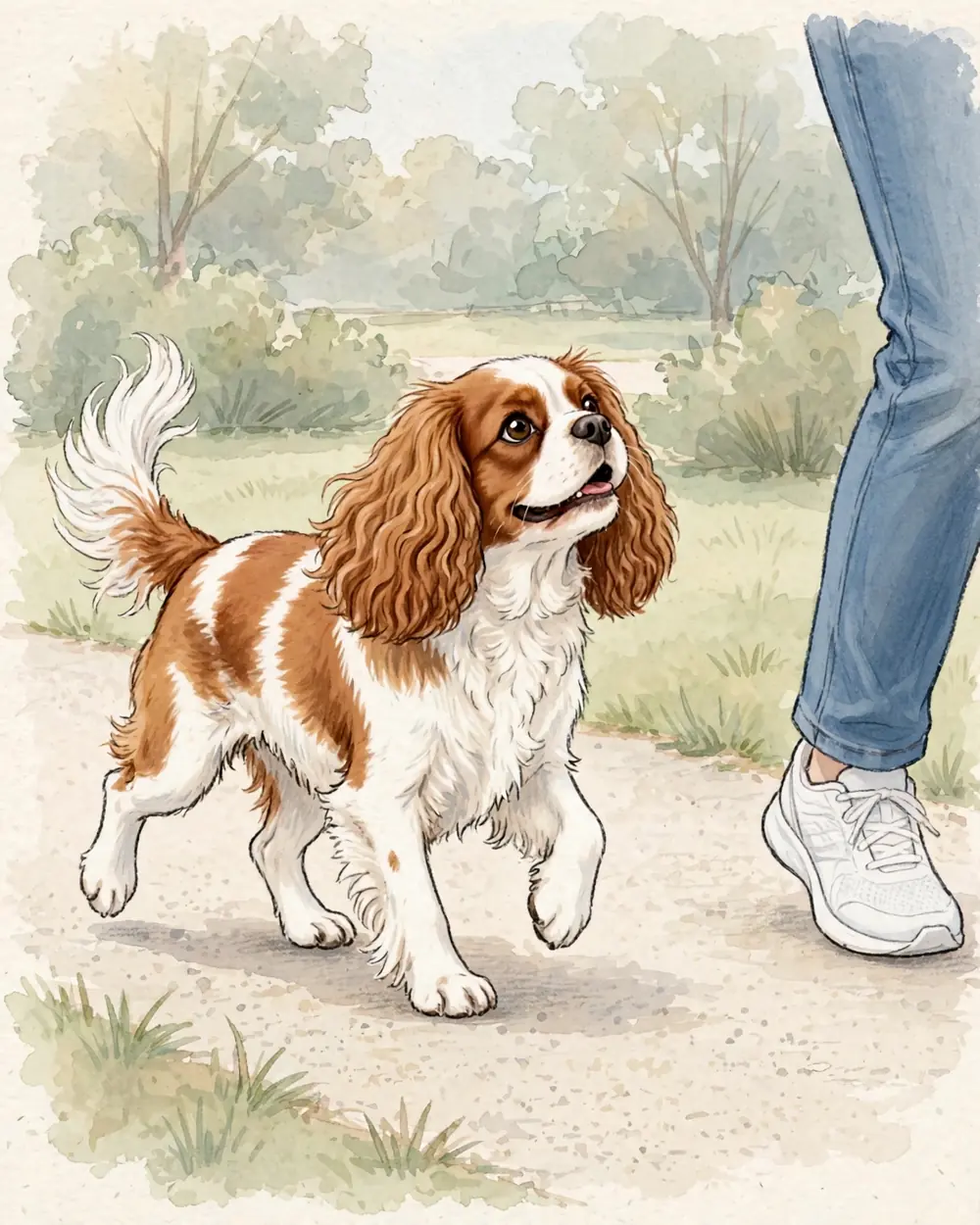
She is gentle, nosy and hopelessly sociable, and she holds one fixed belief: every person on the path has come specifically to see her. Obviously, she thinks, tail already going. Why else would they be out? She has never once been persuaded otherwise.
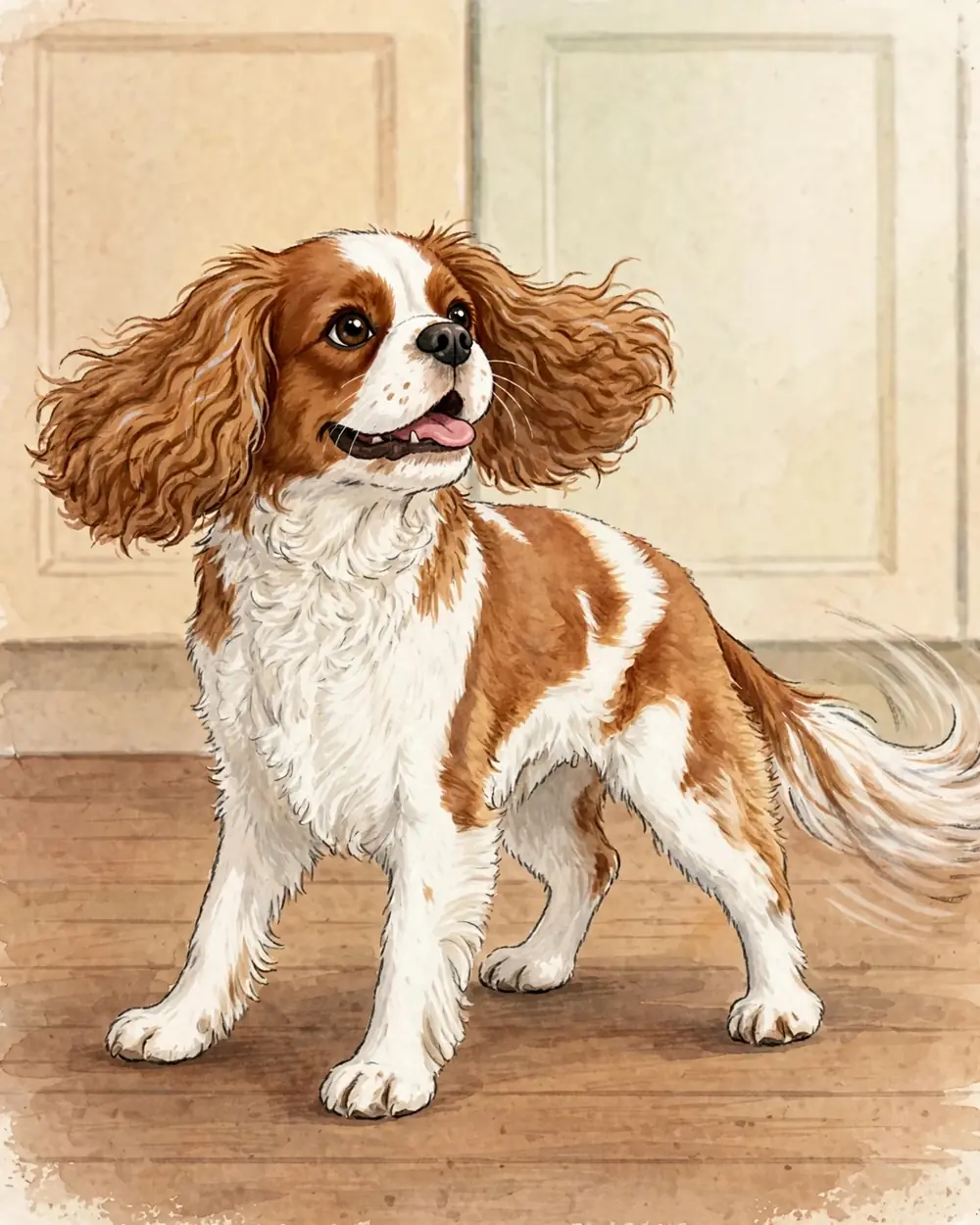
When she is happy, her whole back end wiggles — not just the tail, all of it, swung to one side and back. Her tail thumps on the kitchen floor loudly enough to hear from upstairs. It is not a quiet happiness. It arrives with weather.
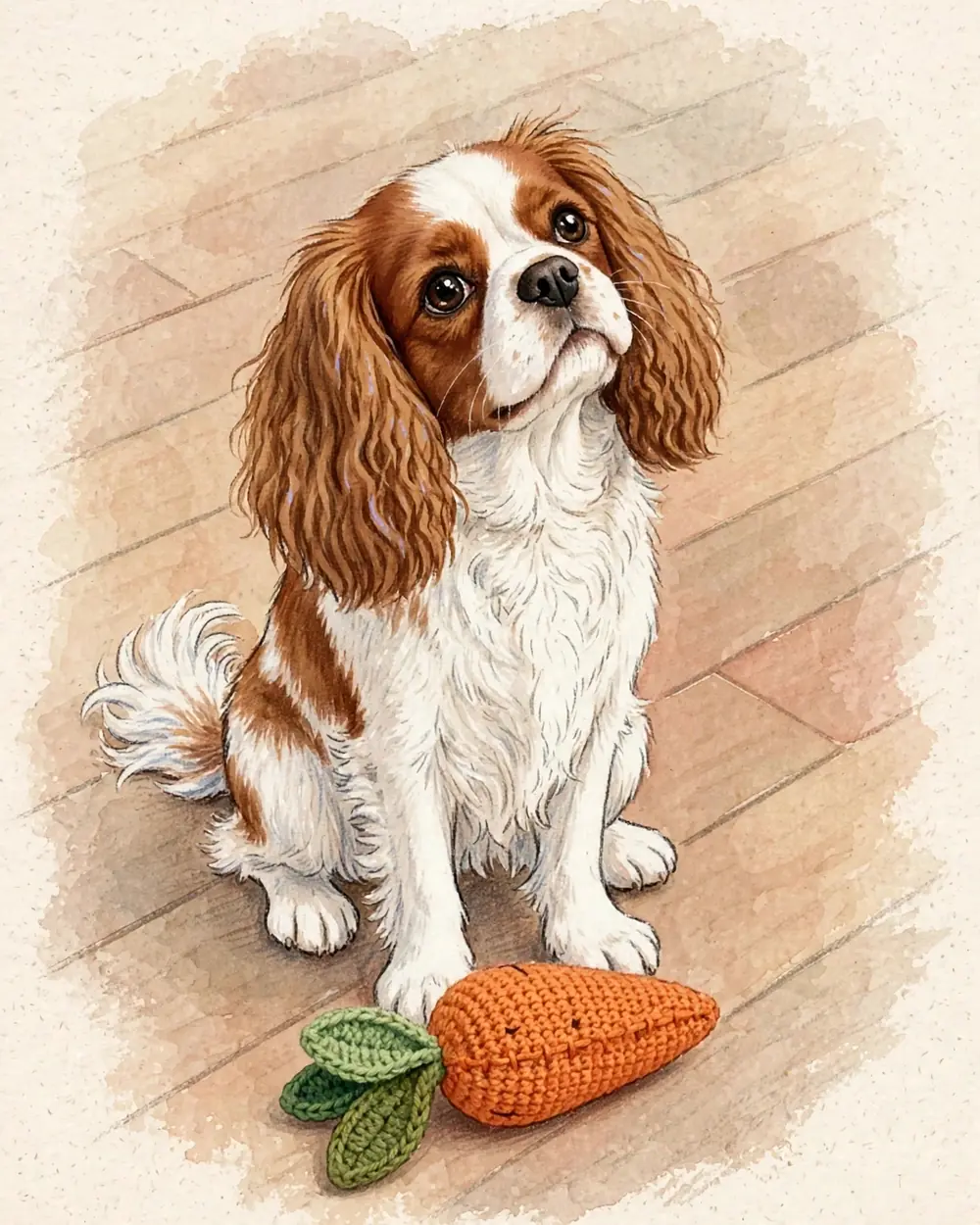
When she wants something — a treat, a cuddle, the carrot back from under the sofa — she sits, tilts her head, and looks straight up with those huge dark eyes. It has never once failed. Once is all it ever needs to do.
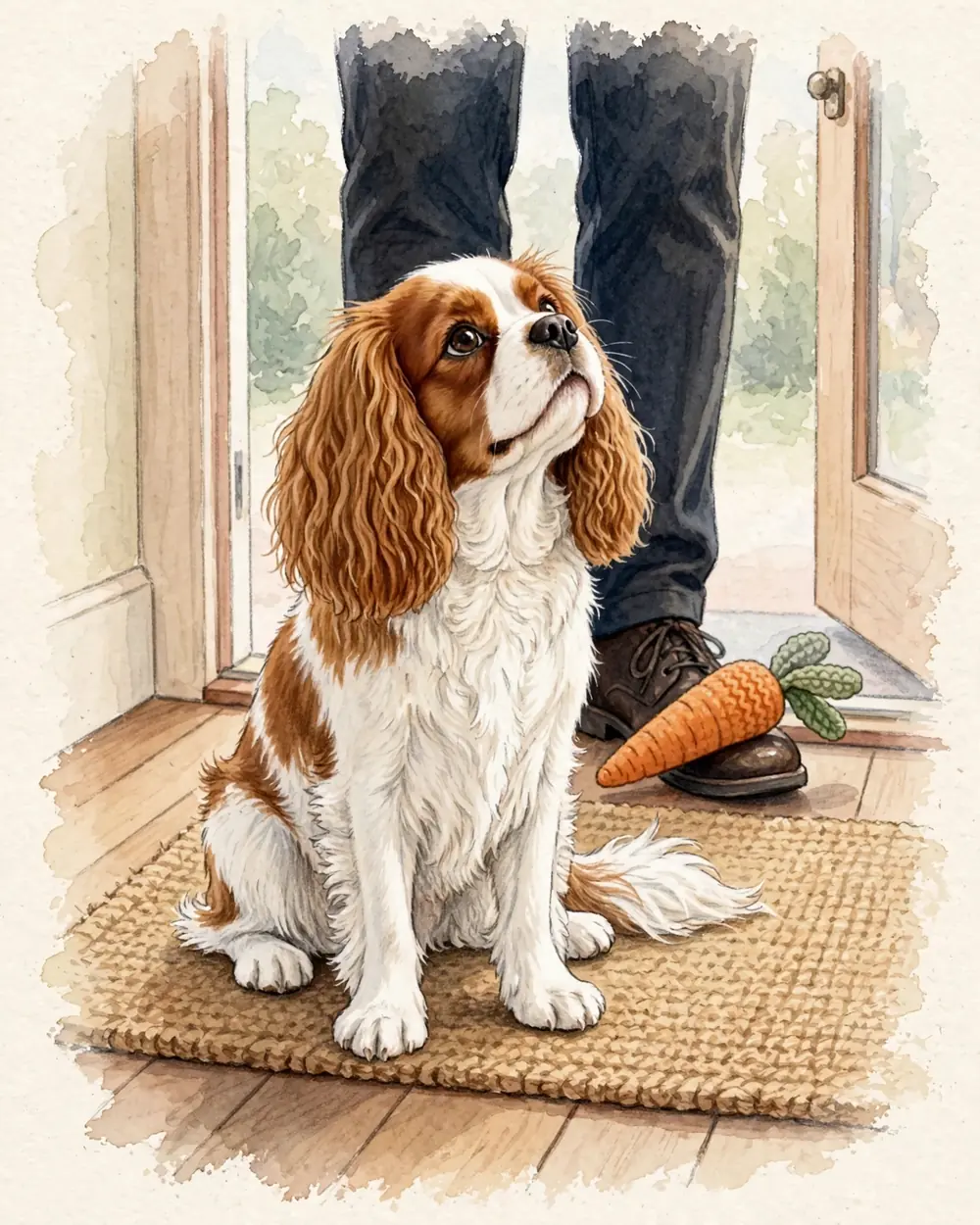
When you come in the door, she drops the knitted carrot on your feet. It has been re-stitched twice, and one ear is green wool from Hannah's sewing box. She does not mind. A carrot that has been repaired is a carrot that is staying.
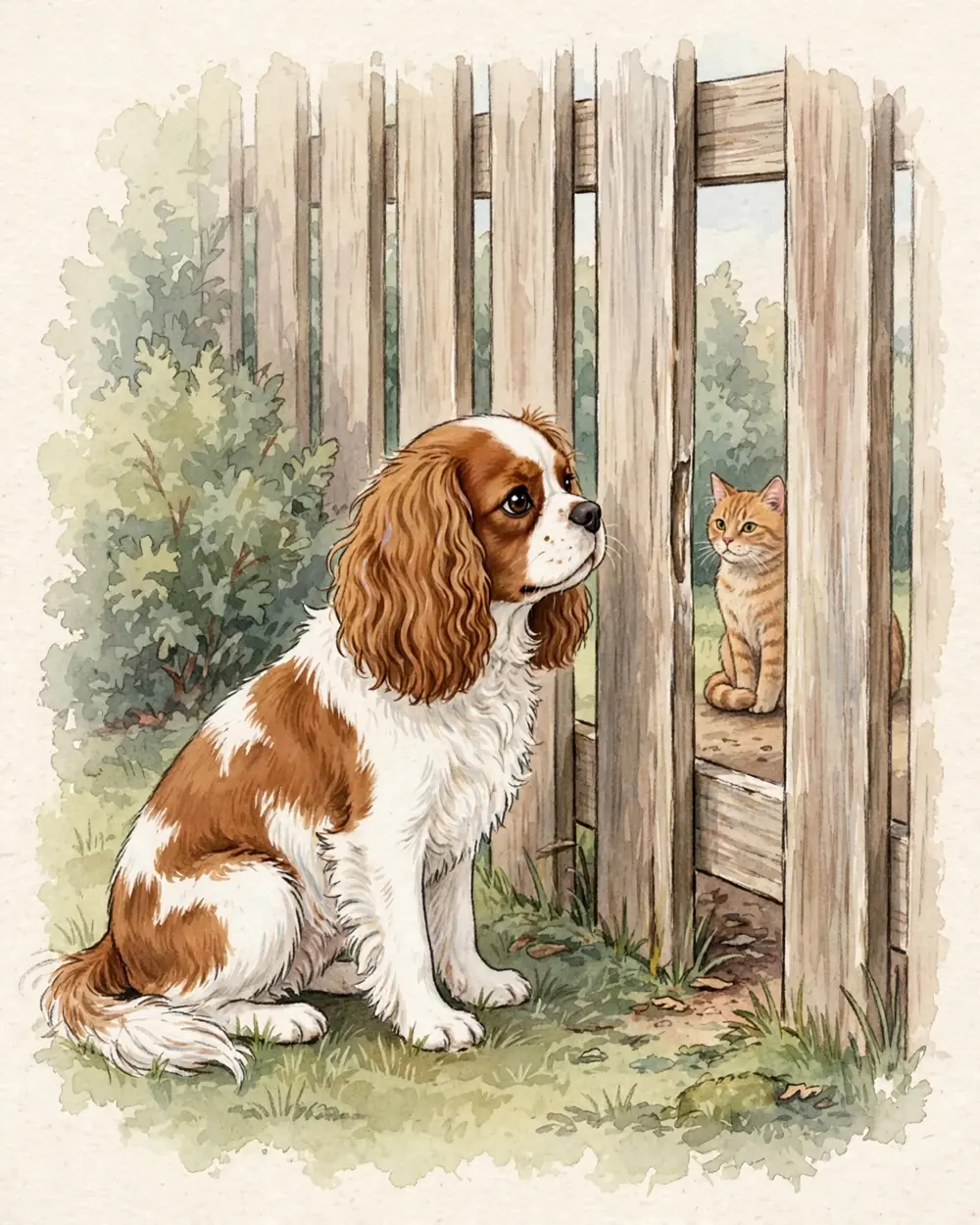
Every afternoon she watches Biscuit, the neighbour's old ginger cat, through the gaps in the garden fence — very politely, from her own side. They have never actually met. Politeness costs nothing, she thinks. Saves a great deal, too. The fence keeps its gaps. She keeps her manners.
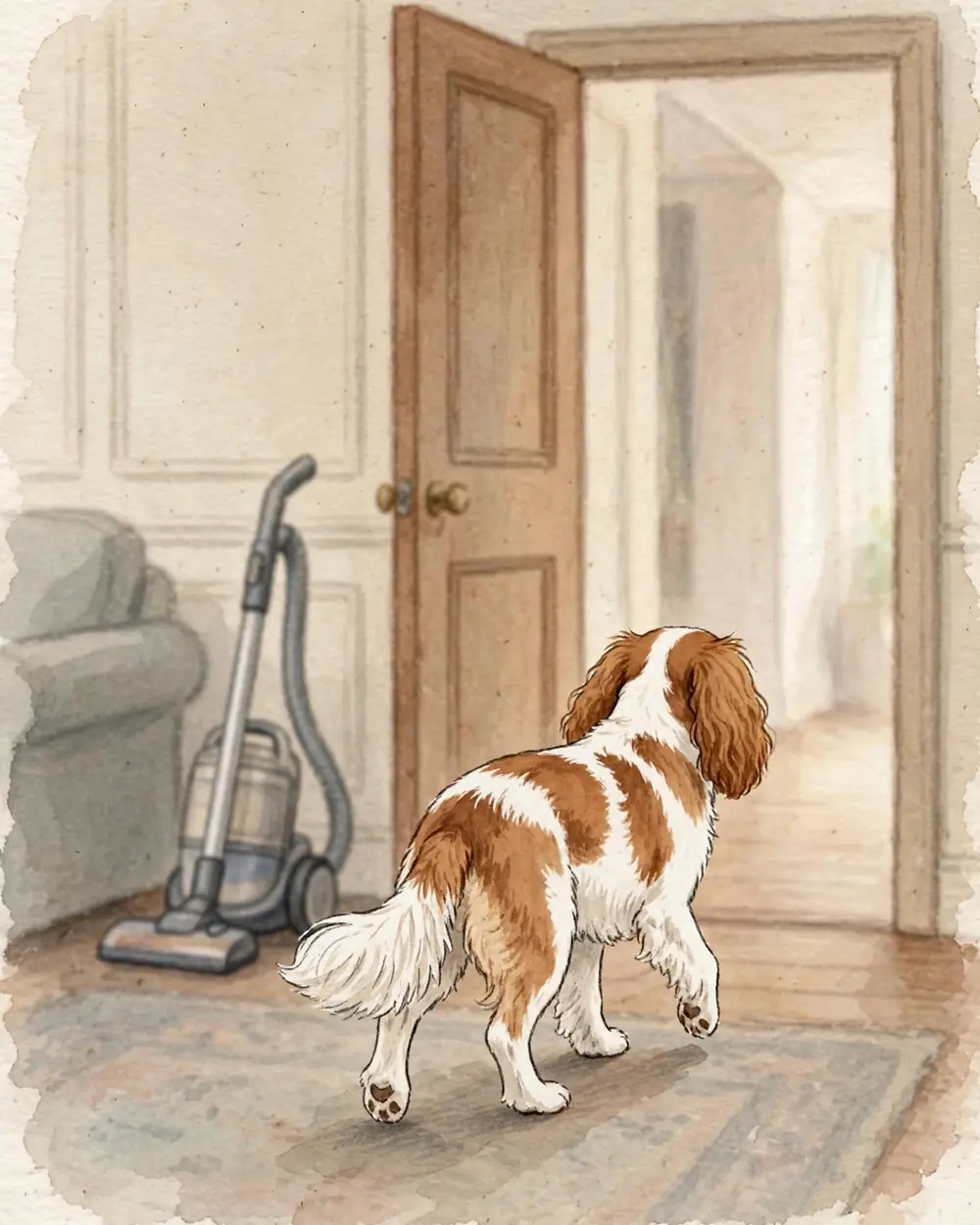
The vacuum cleaner comes out, and she leaves the room with enormous dignity, never hurrying, at exactly the pace of someone who has decided to be somewhere else. Tom calls her Duchess, because of that walk. She considers the title earned.
Chapter Four The Gaps Between the Boards
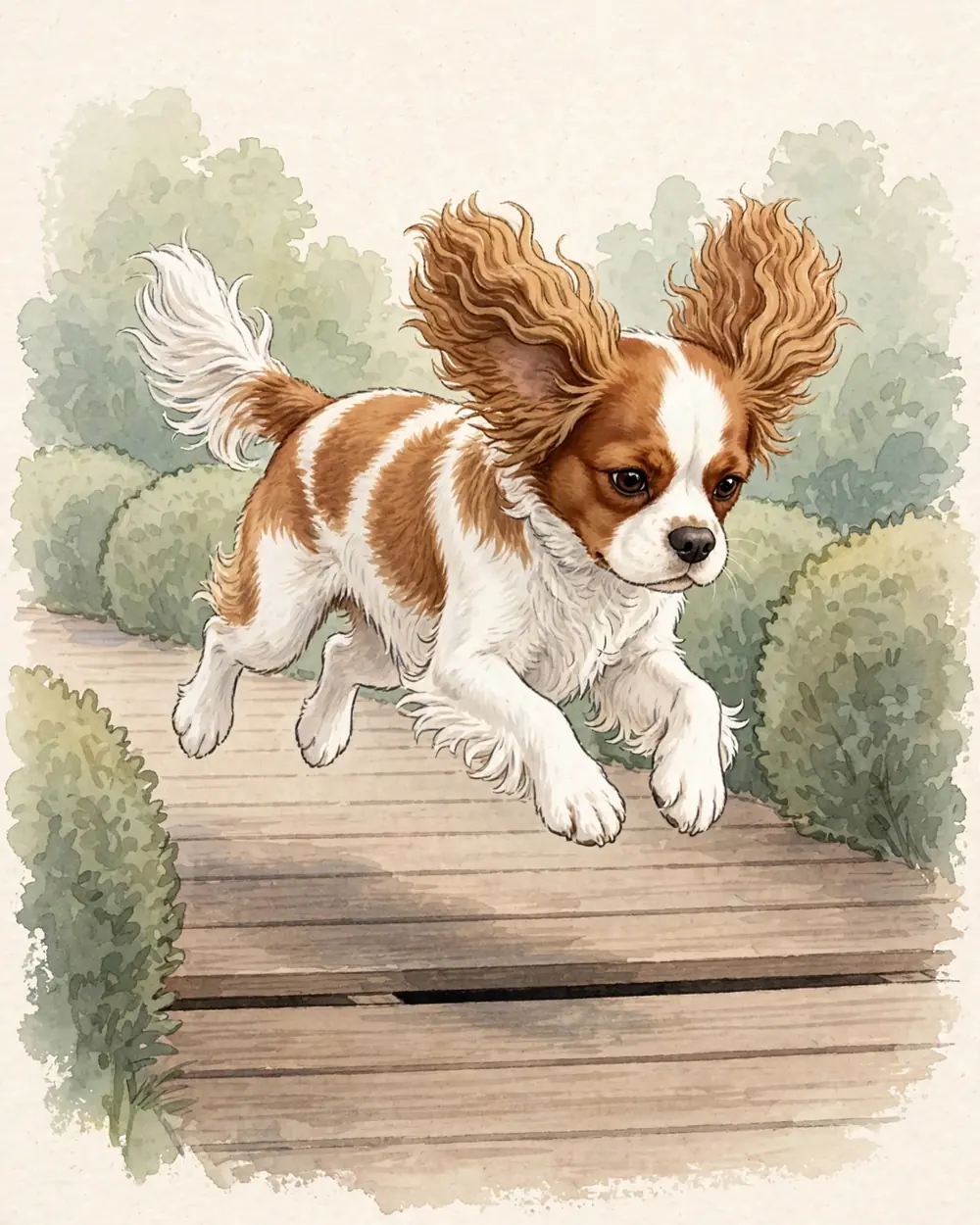
Her first walk on the boardwalk, in that first week, presented a problem: the gaps between the boards. She would not step on them. She hopped over every single one — hop, hop, hop, all the way along. Gaps are not floor, she informed nobody. I will simply go over them.
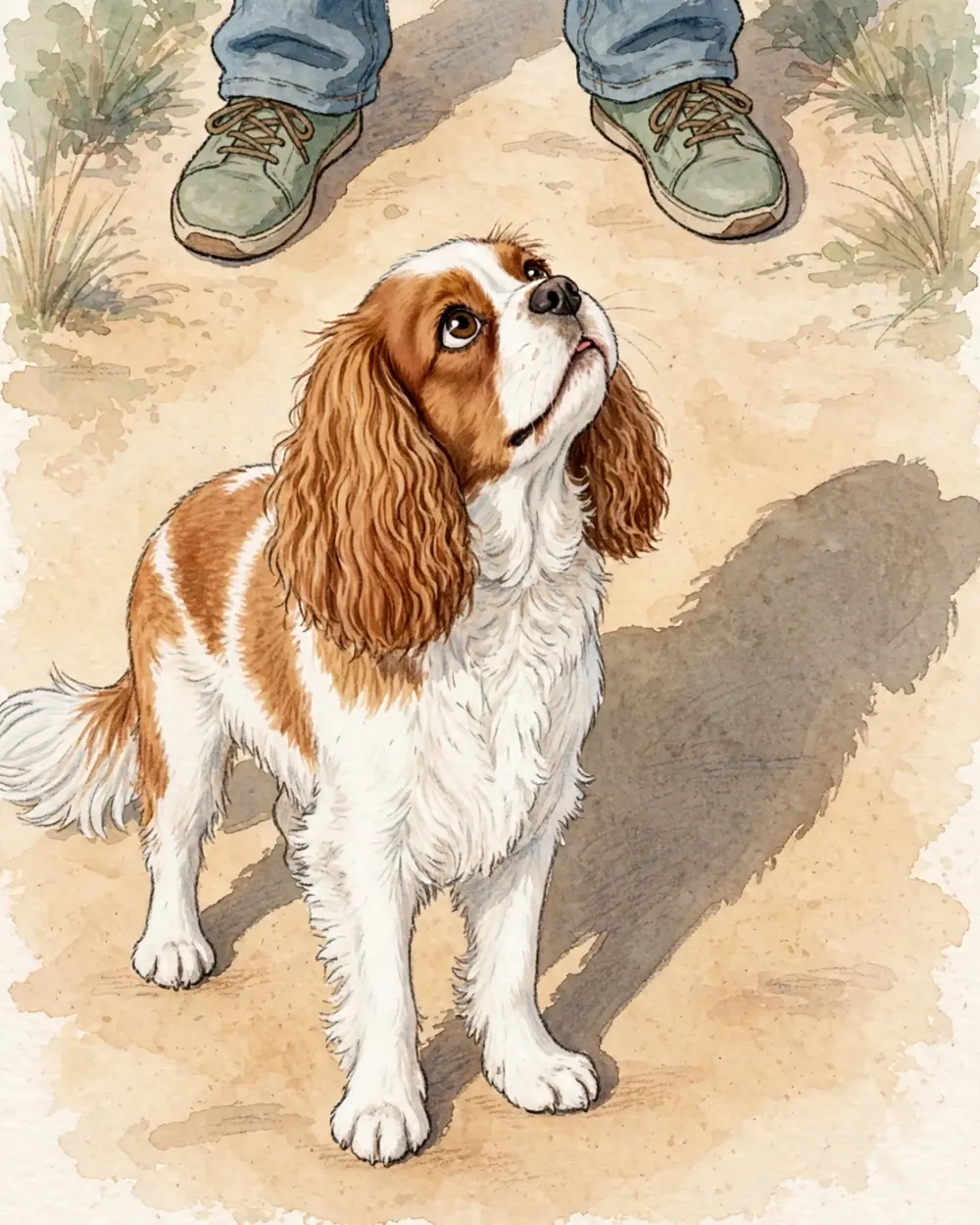
The first time she noticed her own shadow on the sandy path, she stopped dead and stared up at Hannah, as if to ask who the flat dog was. She spent the rest of that walk looking over her shoulder, checking it was still following her. It never explained itself.
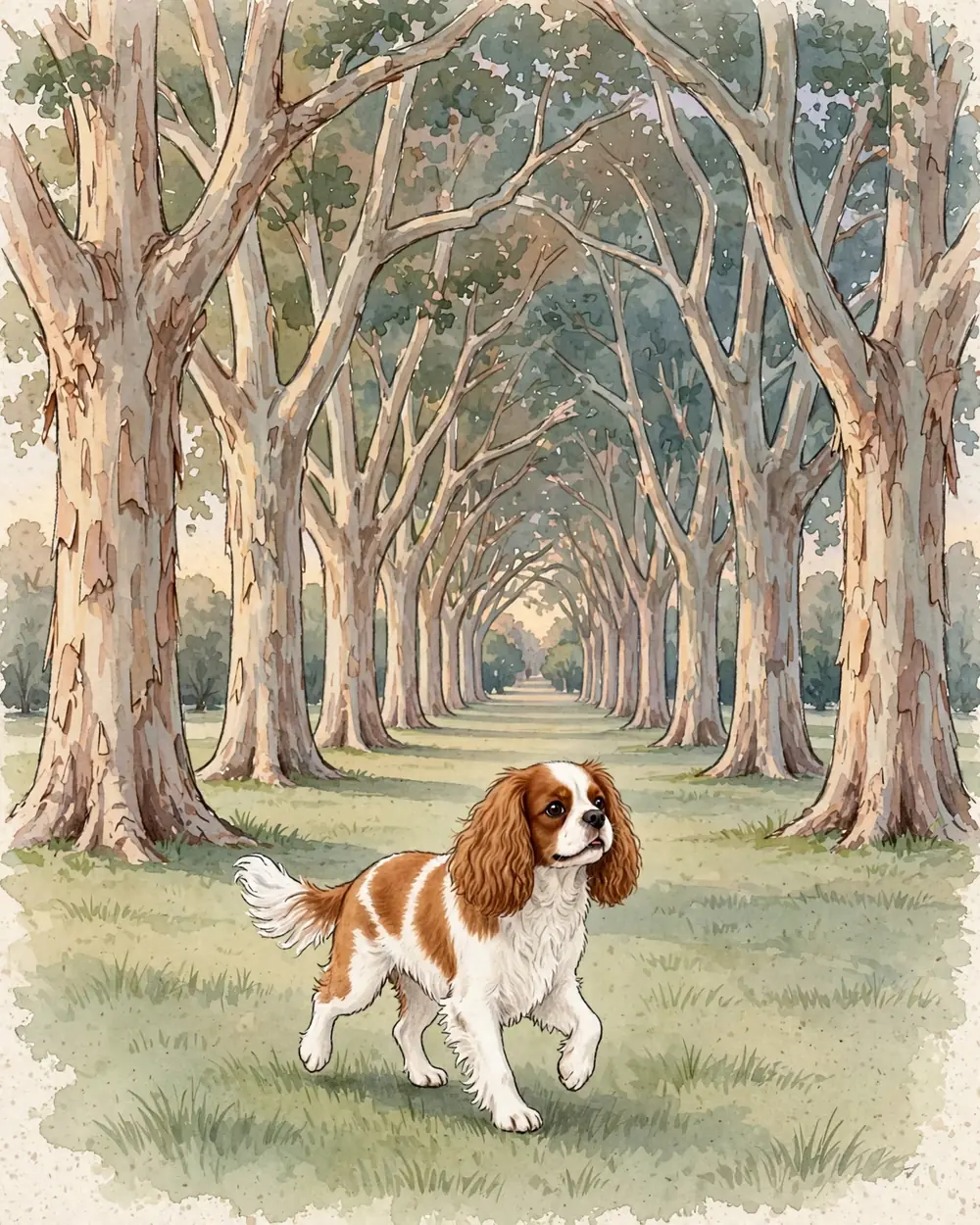
What survived every walk was the part she loves: the avenue of huge old trees with peeling bark in the park near their home. Trees that old, she has decided, have clearly been standing there for someone. Every evening she walks under them, checking that they have.
Chapter Five Six O'Clock
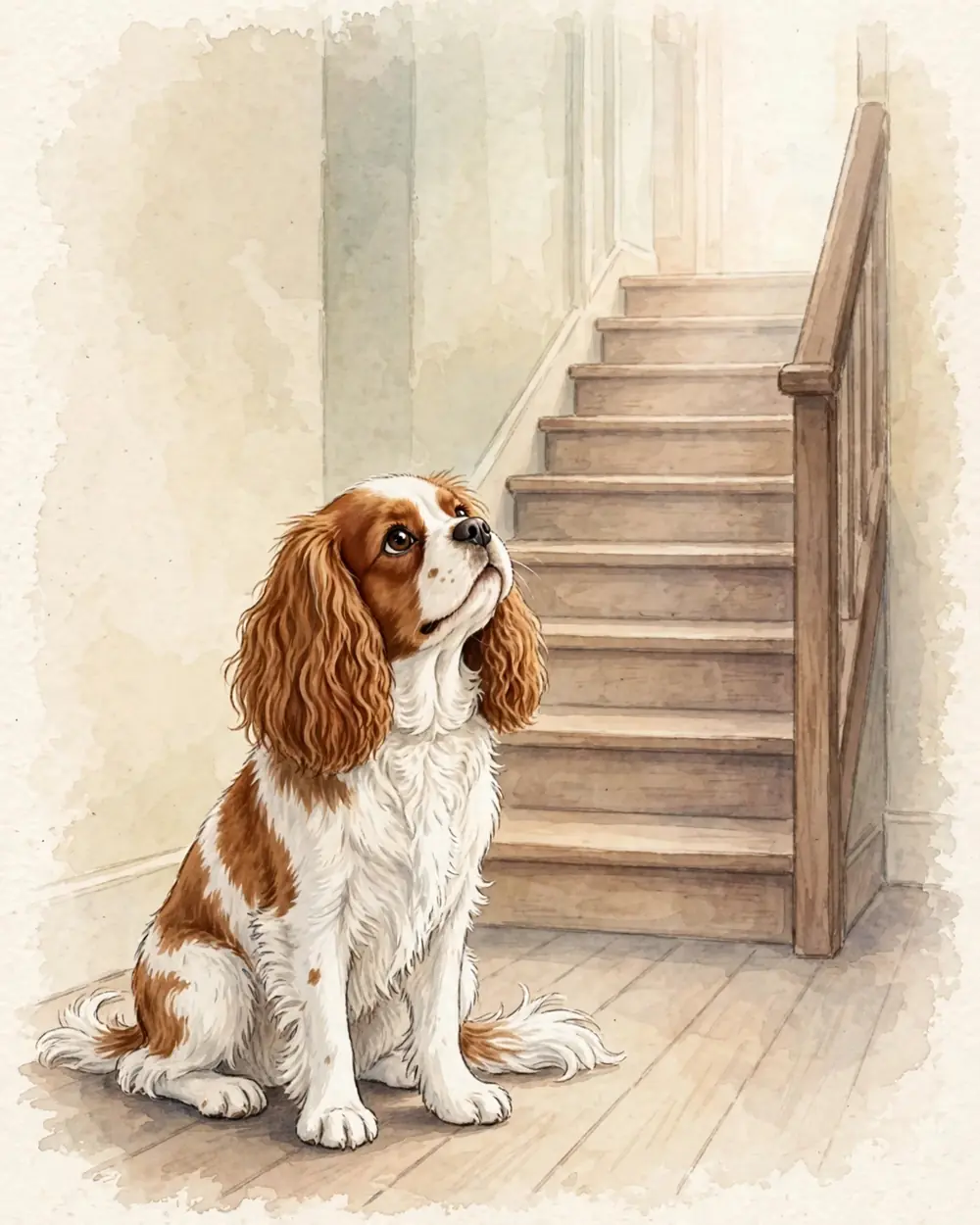
Her days run on three marks, and she guards each one. At seven every morning she waits at the bottom of the stairs for Tom. Seven, she thinks, ears up, one eye on the staircase. He is late by a stair. I will forgive it.
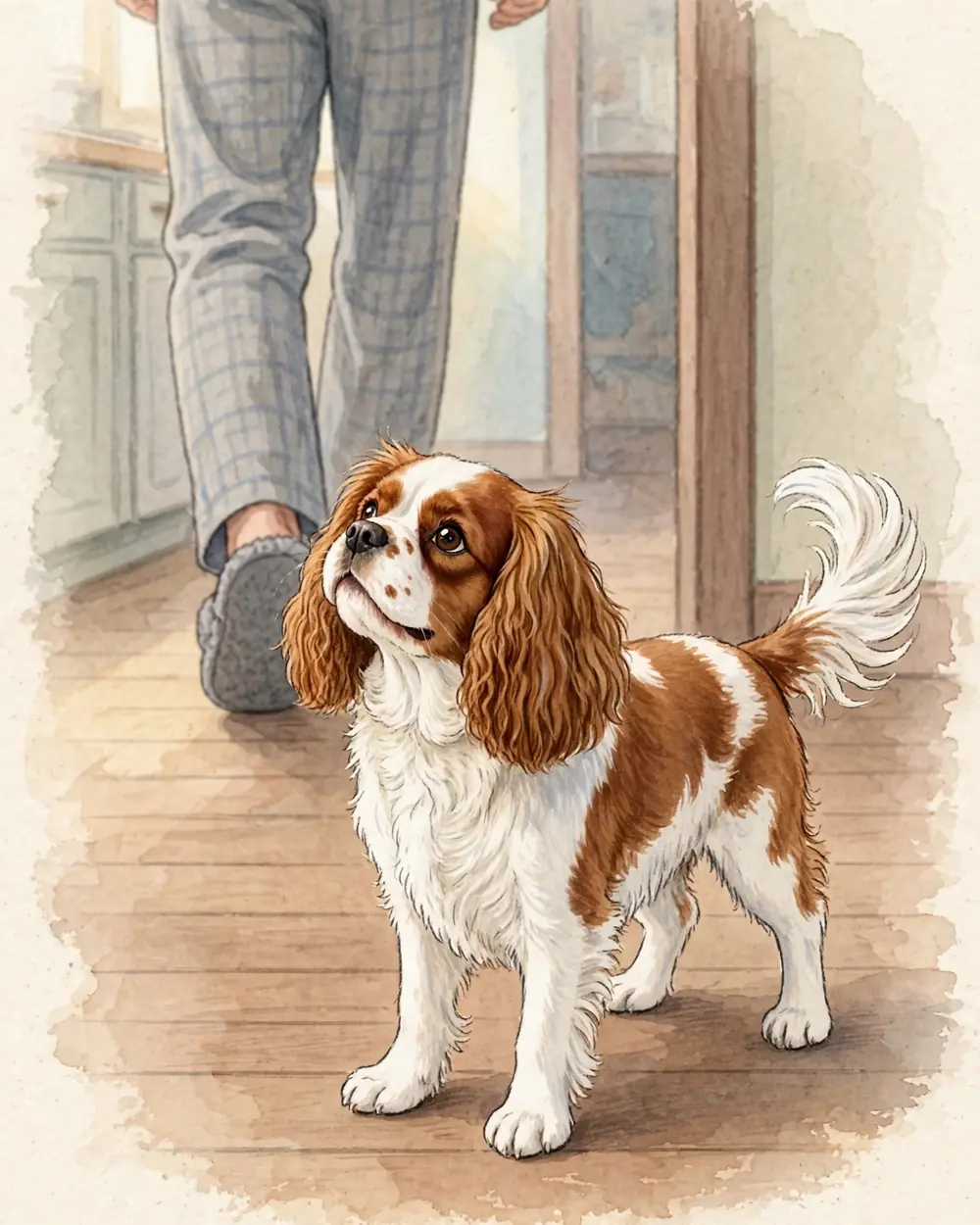
Then Tom comes down, and she follows him into the kitchen for breakfast, tail thumping on the kitchen floor. Tom is her favourite at breakfast time; Hannah is her favourite for everything else. She has always considered this a fair division of labour.
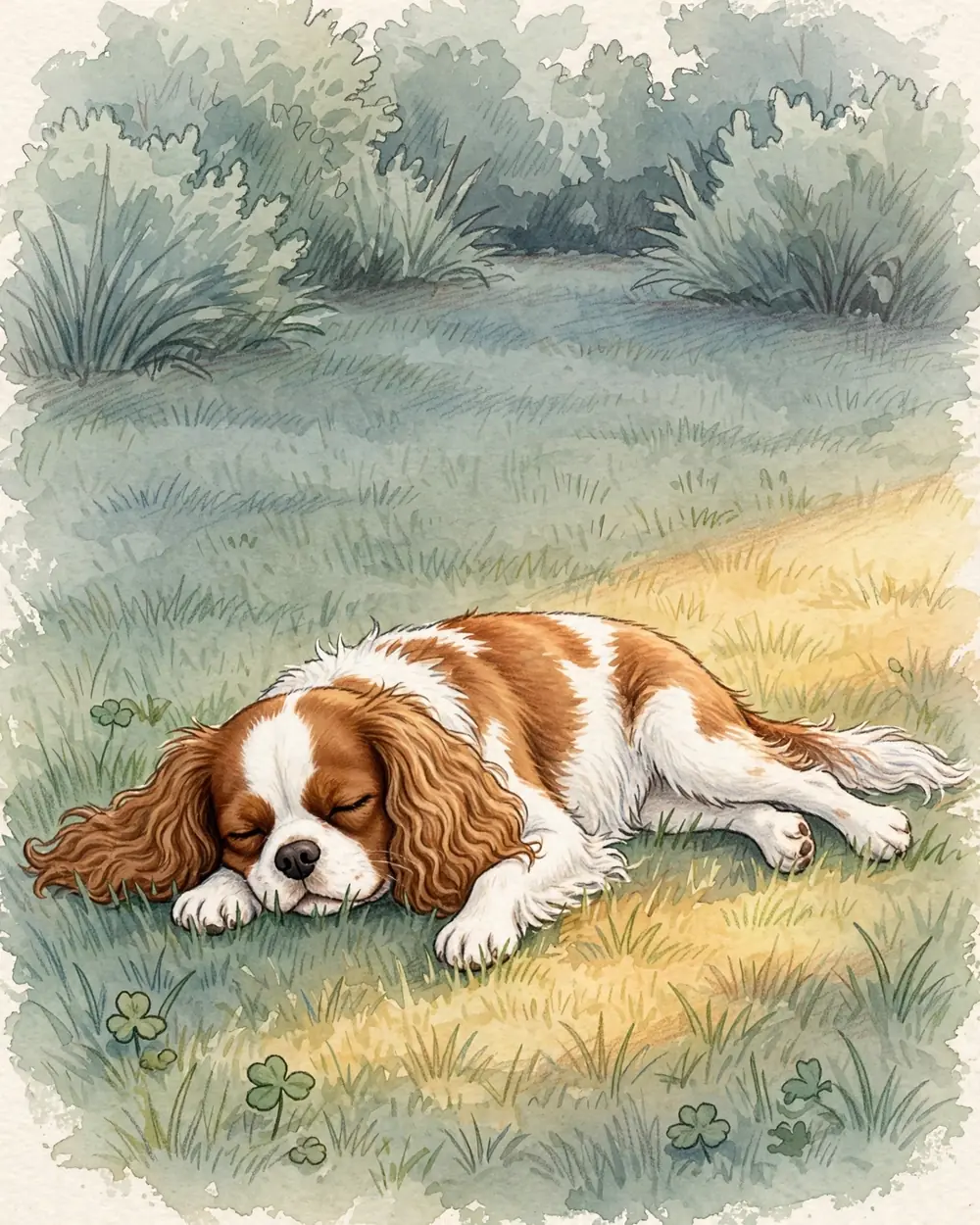
In the late afternoon there is the sun. It crosses the lawn in one patch, slowly, and she lies in it, moving only as far as she must to stay inside it — like a dog keeping an appointment. Warm is warm. It does not wait.
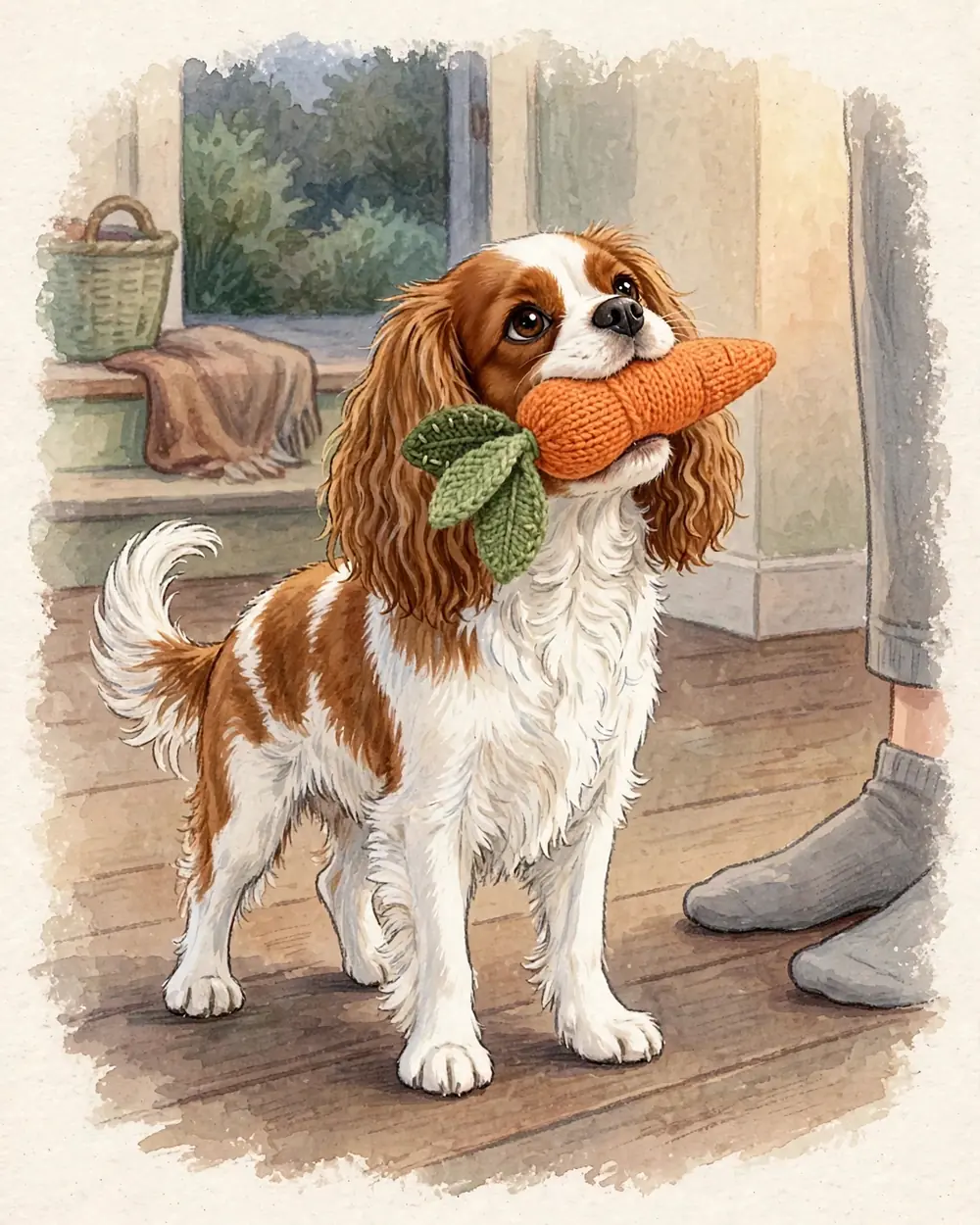
At six every evening she brings Hannah the carrot. This means it is time for their walk — always the same loop: down the boardwalk path, through the avenue of trees, back across the big lawn. Six o'clock is the carrot's finest hour.
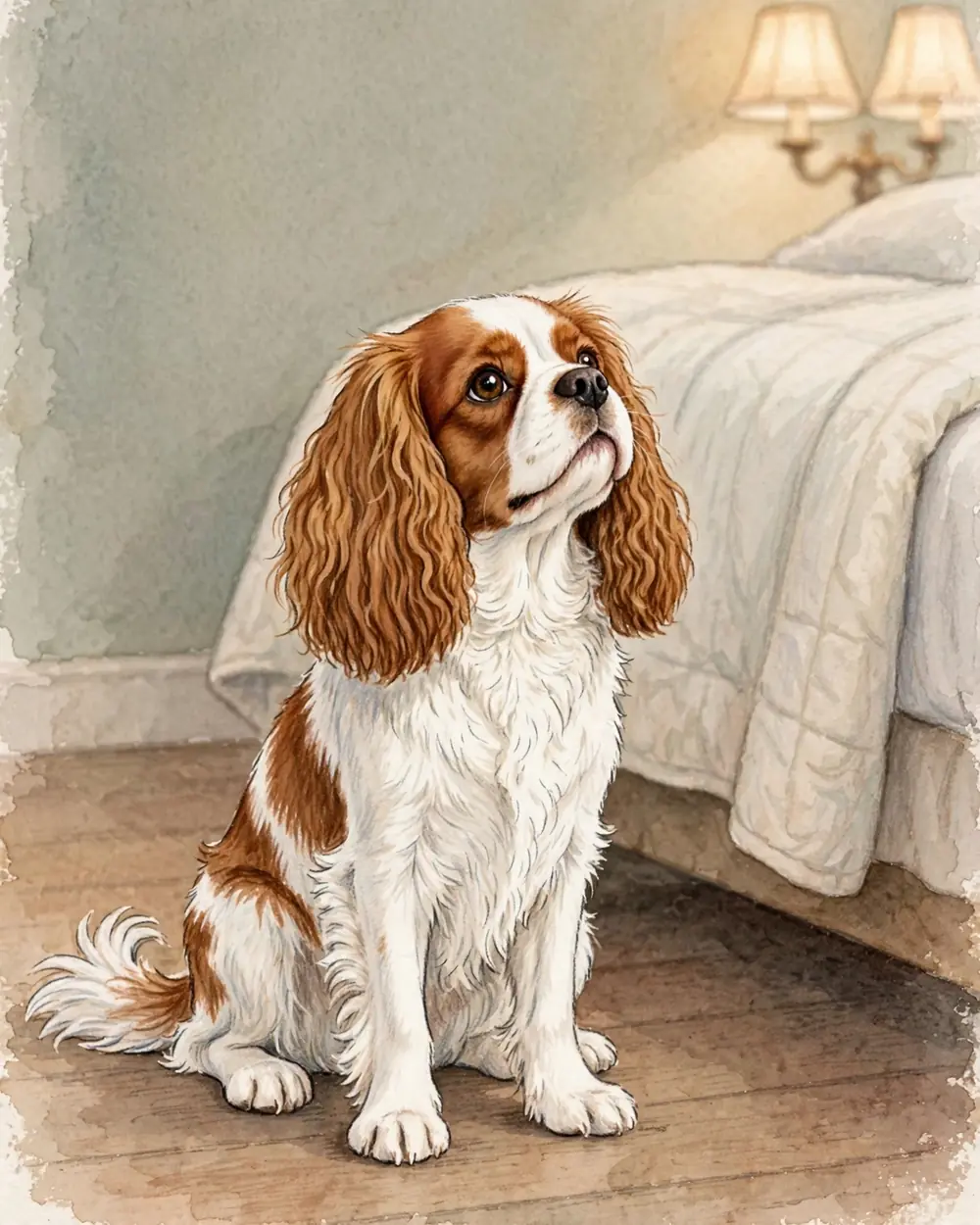
At bedtime she waits beside the bed to be lifted onto the end of it. She could jump. She never has. I could, she thinks, settling at the end of the bed. I don't. That is the whole arrangement, and I am very content with it.
Chapter Six The Whole Lawn to Herself
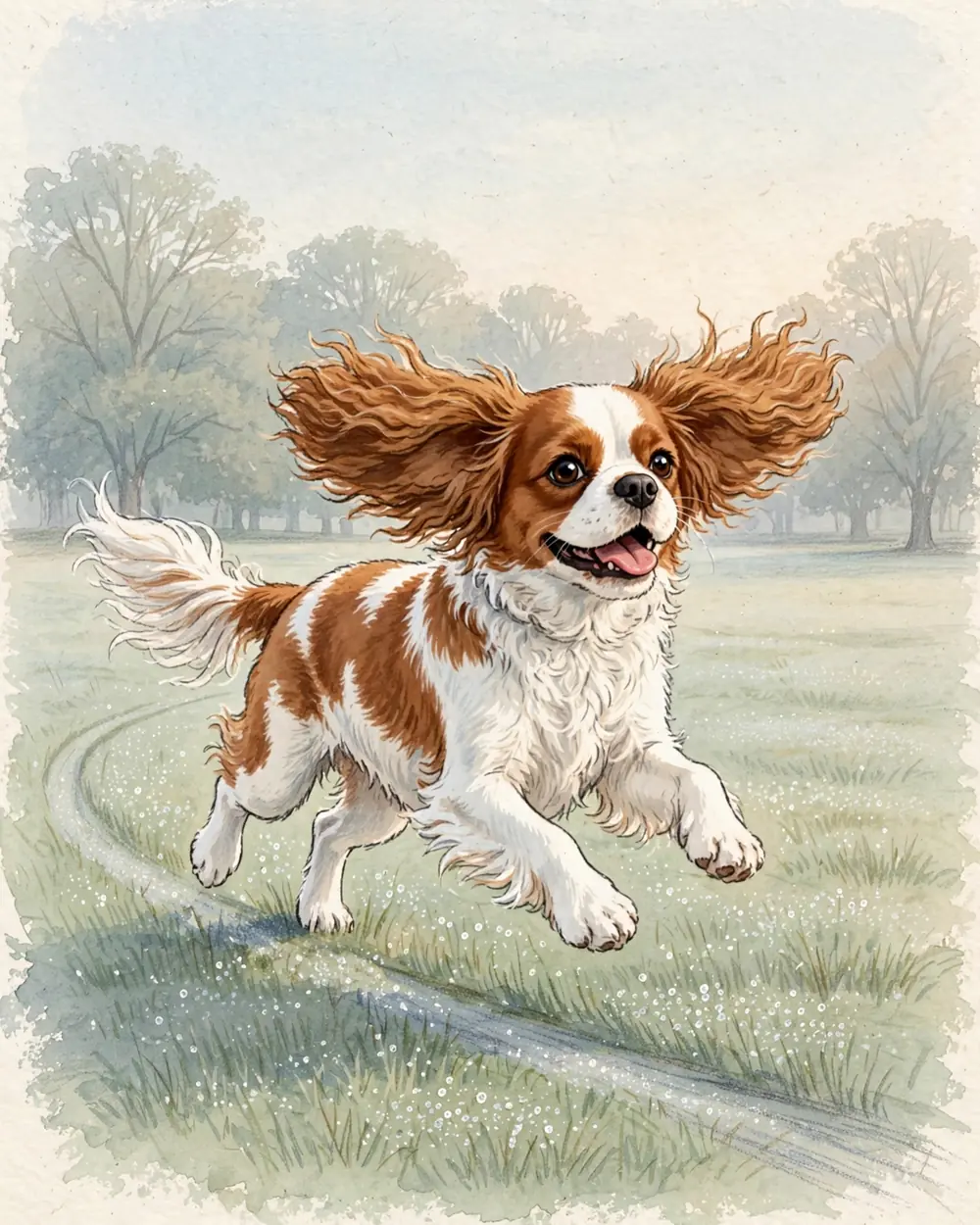
Her third birthday, the first one she had with them: the park really early, before anyone else, the whole lawn to herself, still wet with dew. She ran zoomies in huge circles, ears flying out like wings. All of it, she thought. Wet, and green, and mine.
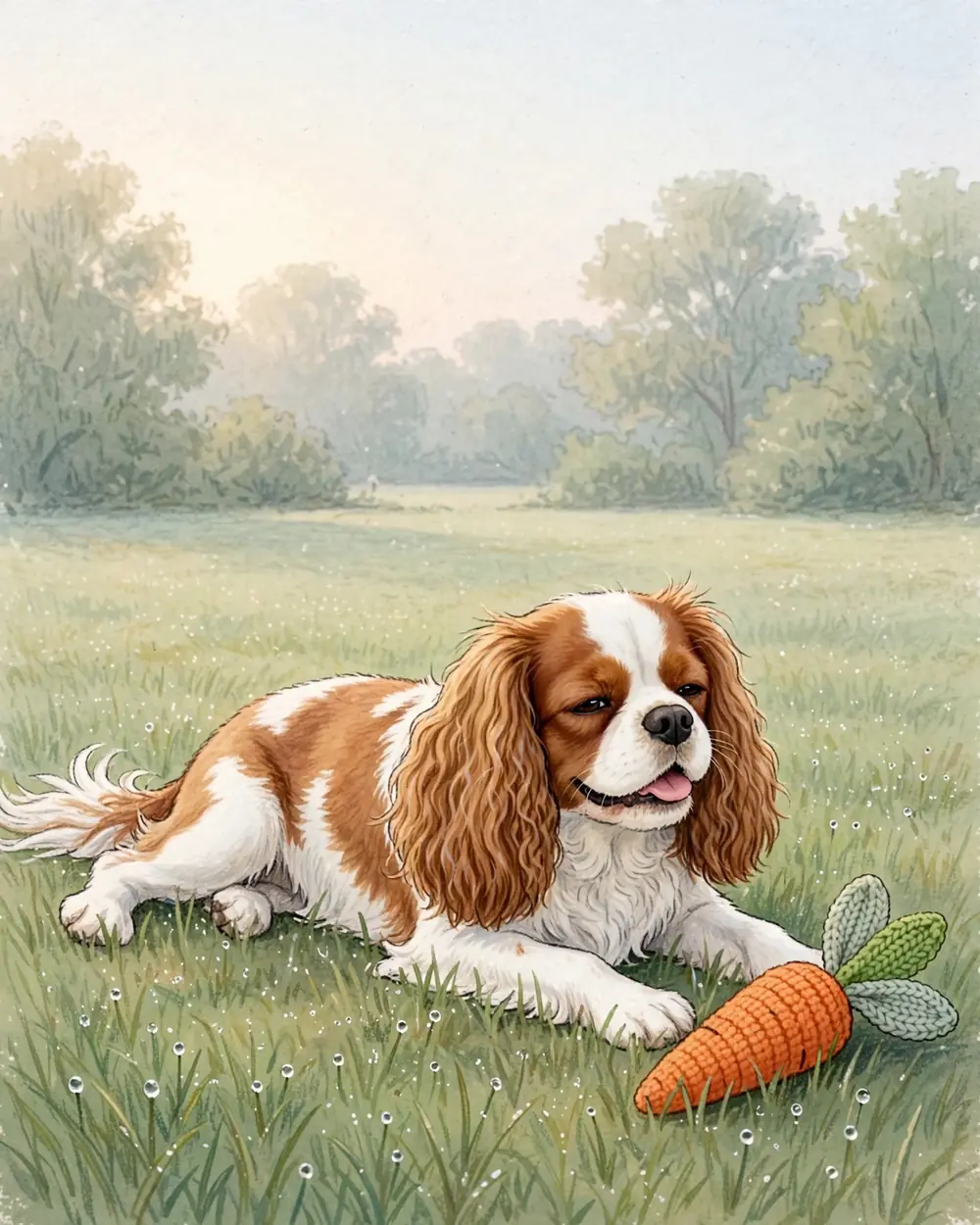
Then she flopped down in the sun with her carrot — re-stitched twice, its odd green ear from Hannah's sewing box — in the dew beside her. She turned five this spring, and the lawn is still there. Early mornings still belong to whoever gets there first.
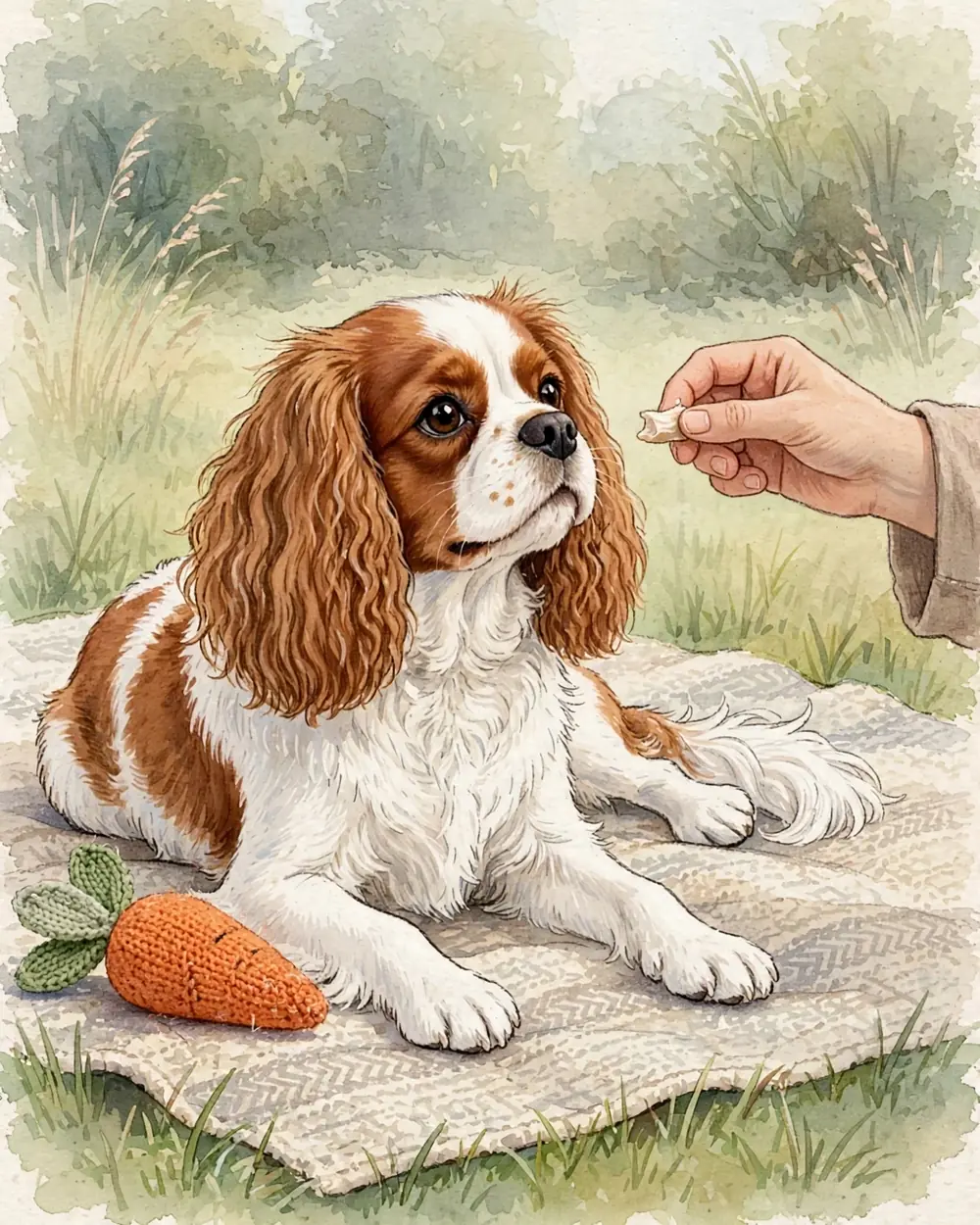
Then came the picnic: a blanket on the grass, and one tiny piece of chicken, which she ate very slowly, as if to make it last. She has never been in a hurry with anything that good. If I take my time, she reasoned, it is still happening.
Closing Chapter If I Could Tell You One Thing
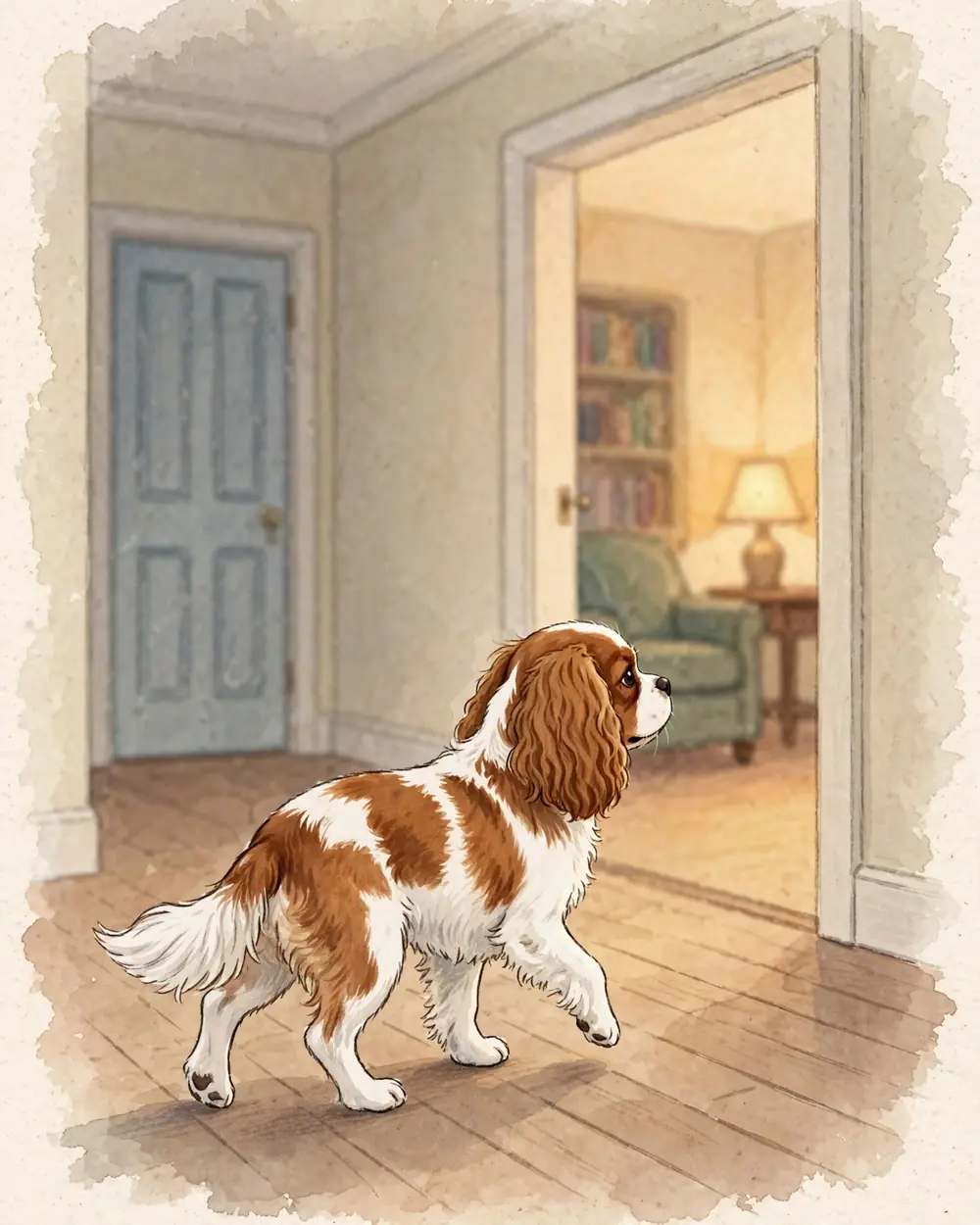
Hannah. I know you remember my first week — me at the front door every evening, facing it. Seven evenings I gave that door. So here is the one thing: I don't have to wait by the door anymore. I knew it on the eighth evening, when I put myself across your feet instead, and nothing bad happened.
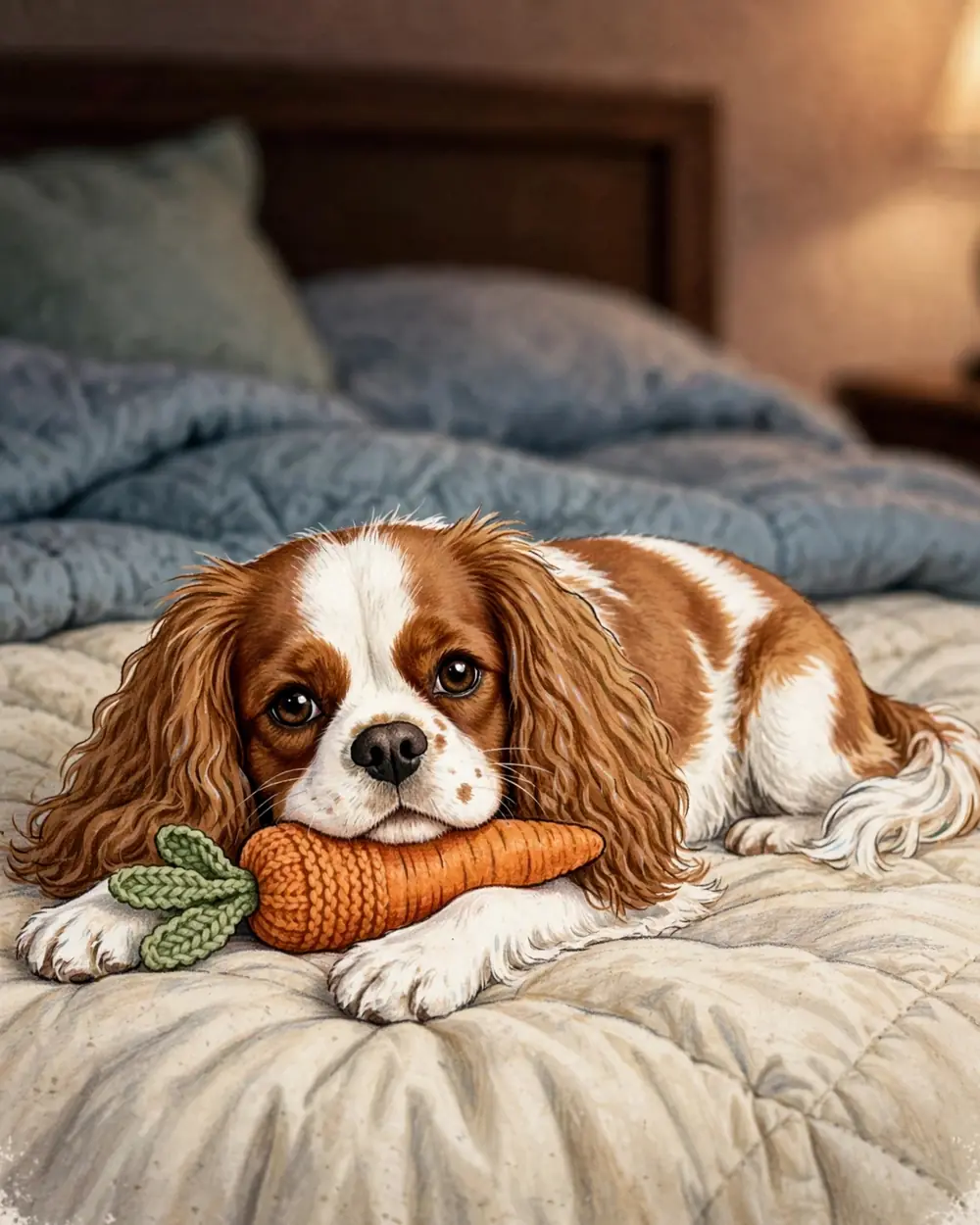
I don't need the door. I need your feet, and six o'clock, and the end of the bed. This is home. You are not going anywhere. The carrot is under my chin and I know exactly where you are. I'm not waiting anymore. I'm already here.
— The End —