Sample story
Madam Pip
Two and a half kilos of fierce, unshakeable devotion
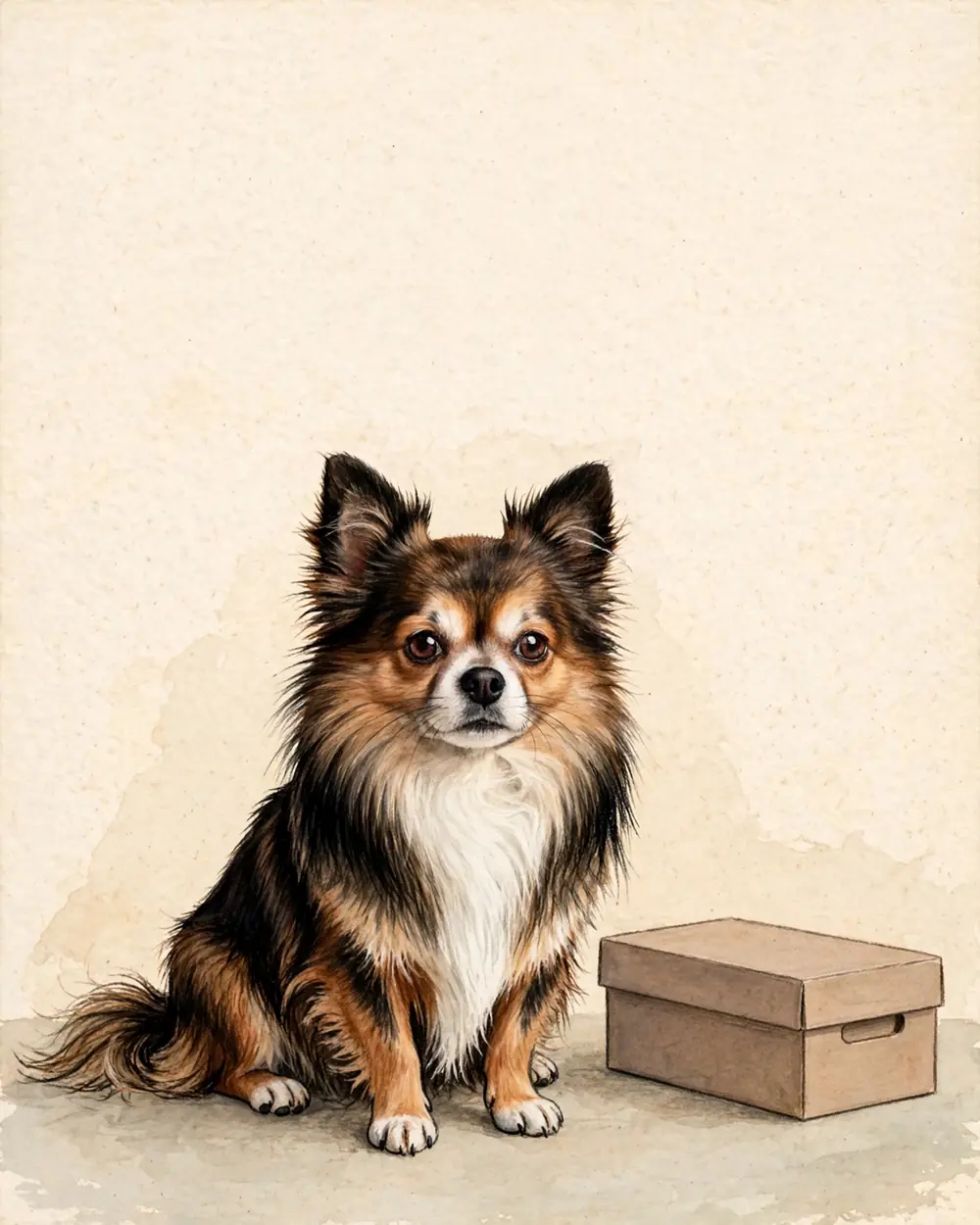
A sample story. The photos show a real dog, shared freely by the photographer; the memories were written for this example. Your story is made only from what you tell us about your dog.
Made from these photos


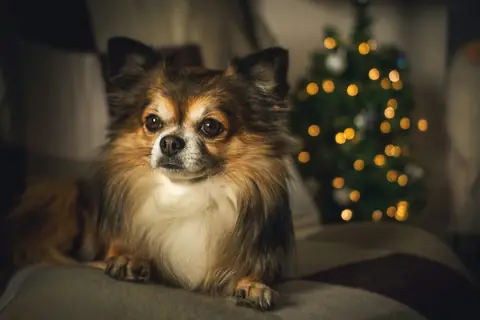
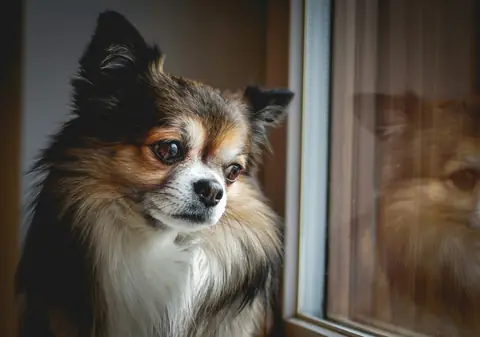
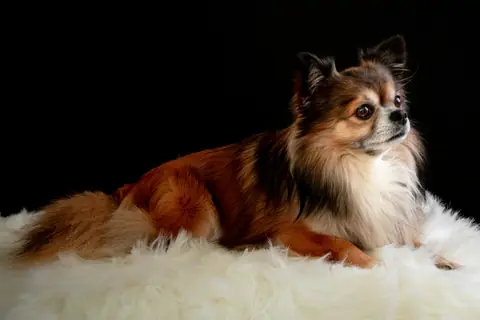
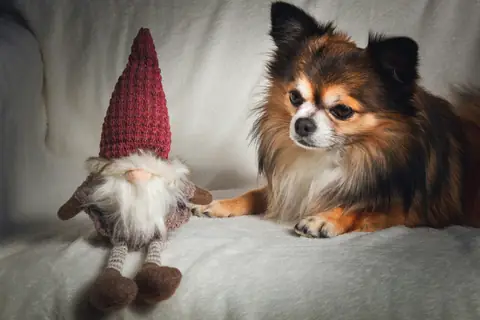
Photo: Herbert Goetsch / Unsplash
A Furhaps Keepsake Story
Dedication
For Mum — for Margaret, who rode the number 12 bus home with a barking dog in a shoebox-sized carrier. With all my love, Anna. Christmas.
Chapter One The Number 12 Bus
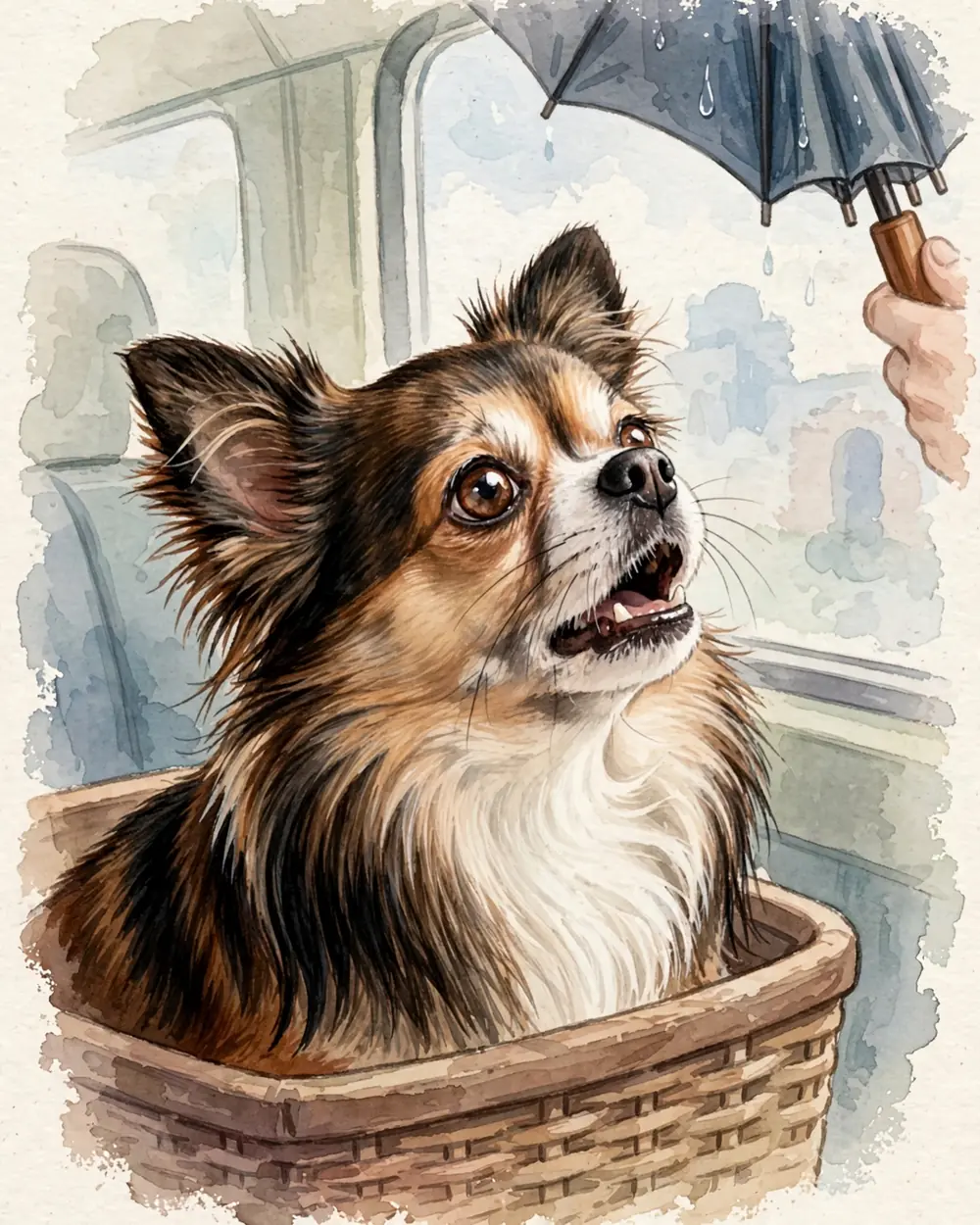
There was an umbrella on the number 12. Pip barked. Pip barked again. Nobody on the bus had warned her about umbrellas, and she was not about to let this one pass unannounced. I see you, umbrella. Everyone on this bus sees you.
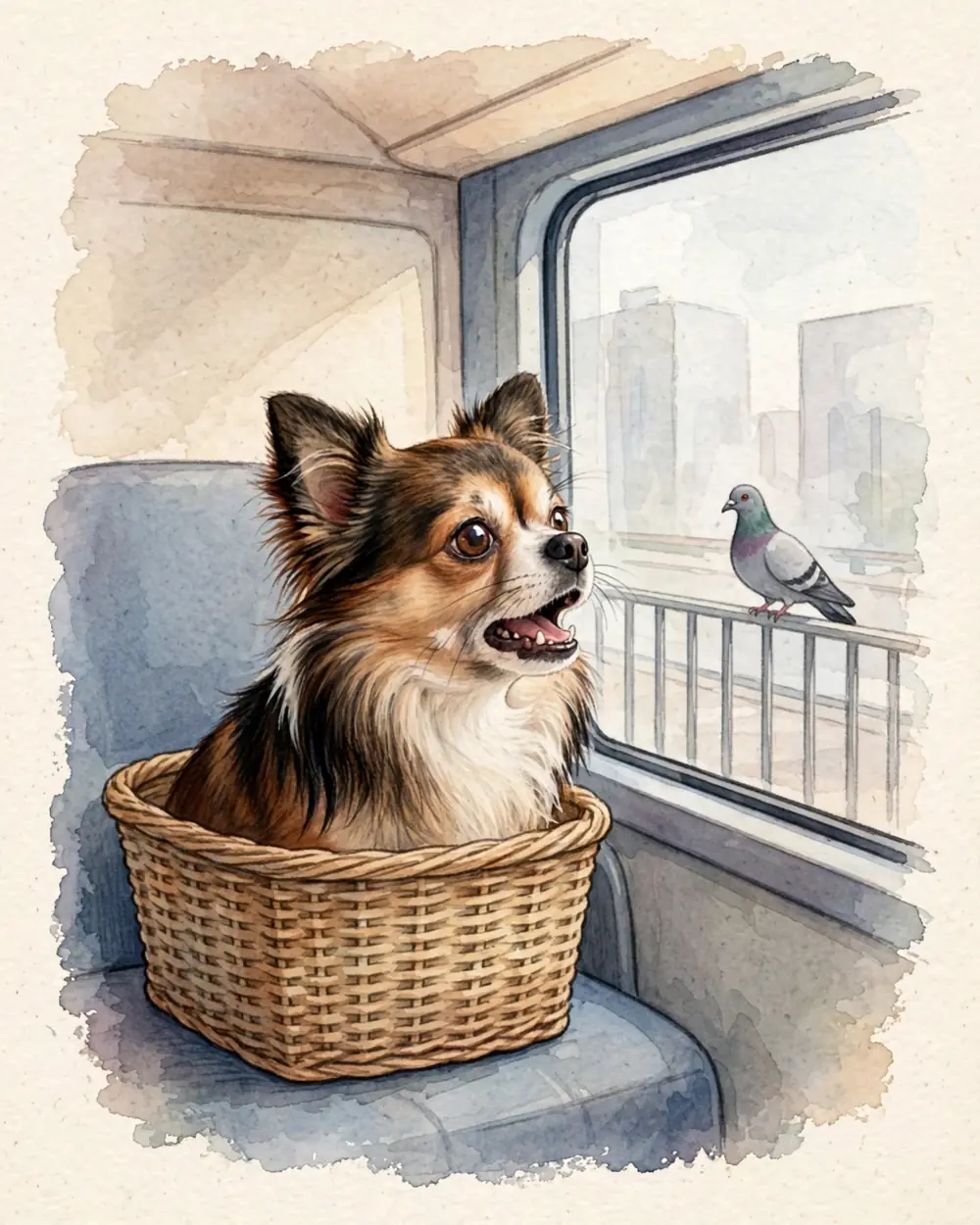
Then a pigeon — an actual pigeon — appeared outside the window, being a pigeon at her through the glass. She gave it her full opinion. The pigeon stayed. The glass stayed. Pip won on points. You cannot come in. I have made my ruling.
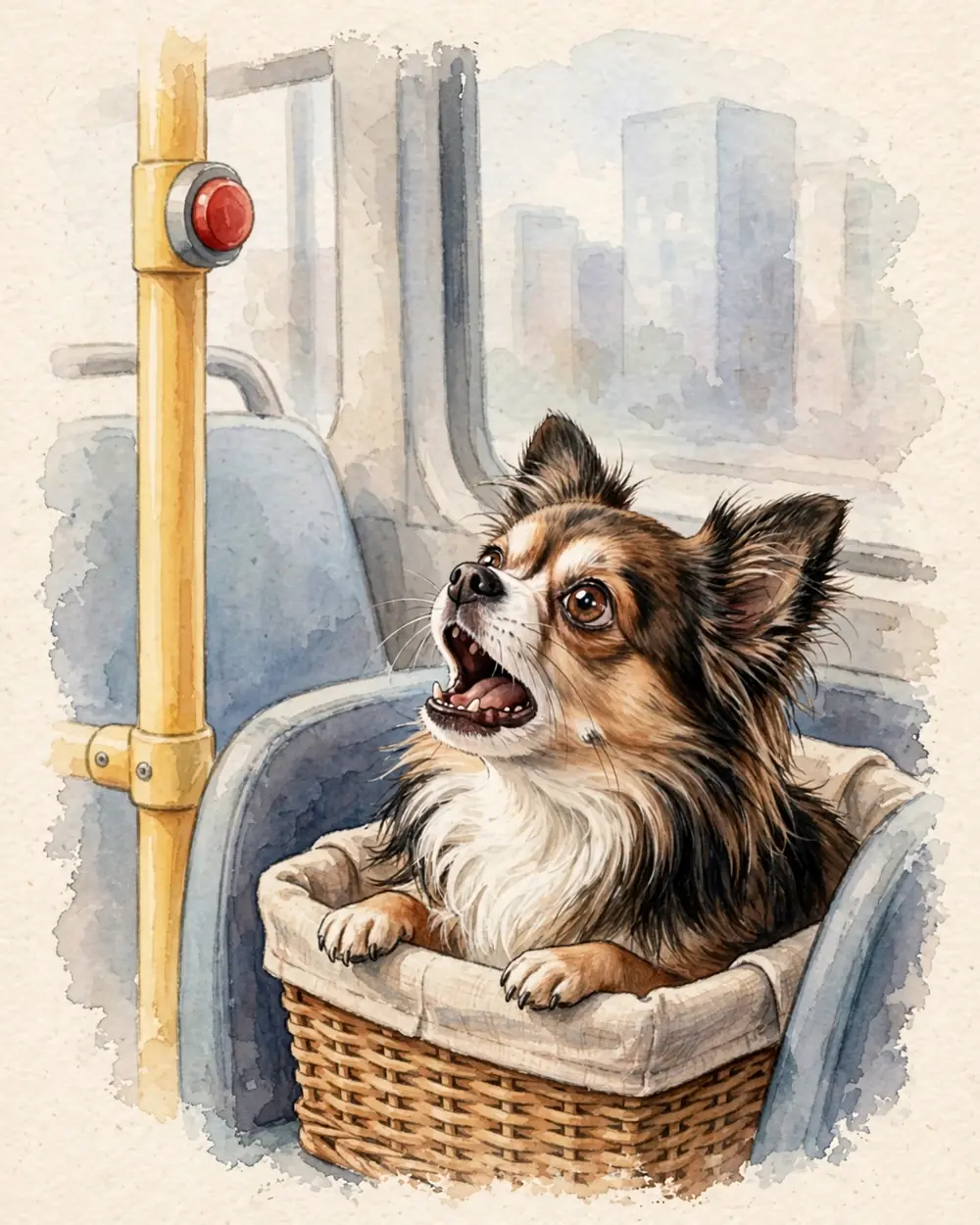
And the bell. Somebody rang the bell, and Pip barked at the bell. Somebody rang it again. She barked again. The number 12 gets plenty of use. Ring. Bark. Ring. Bark. I am warning all of you.
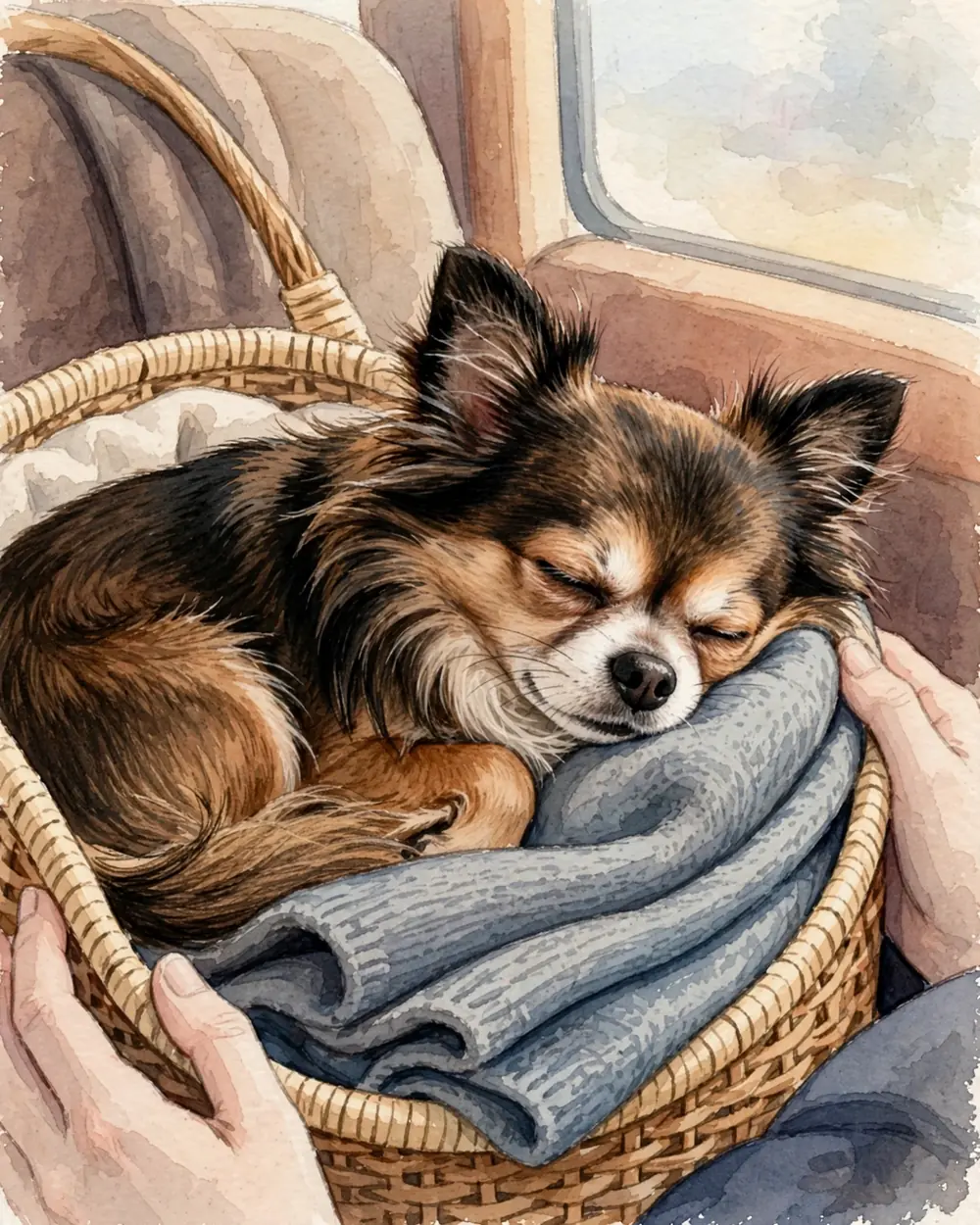
Two stops before home, it all went quiet. Pip curled up on Mum's scarf and fell asleep, worn out from defending a bus. Mum says that's when she knew. Seven years ago now, and she never took the return trip.
Chapter Two Learning the Ground Rules
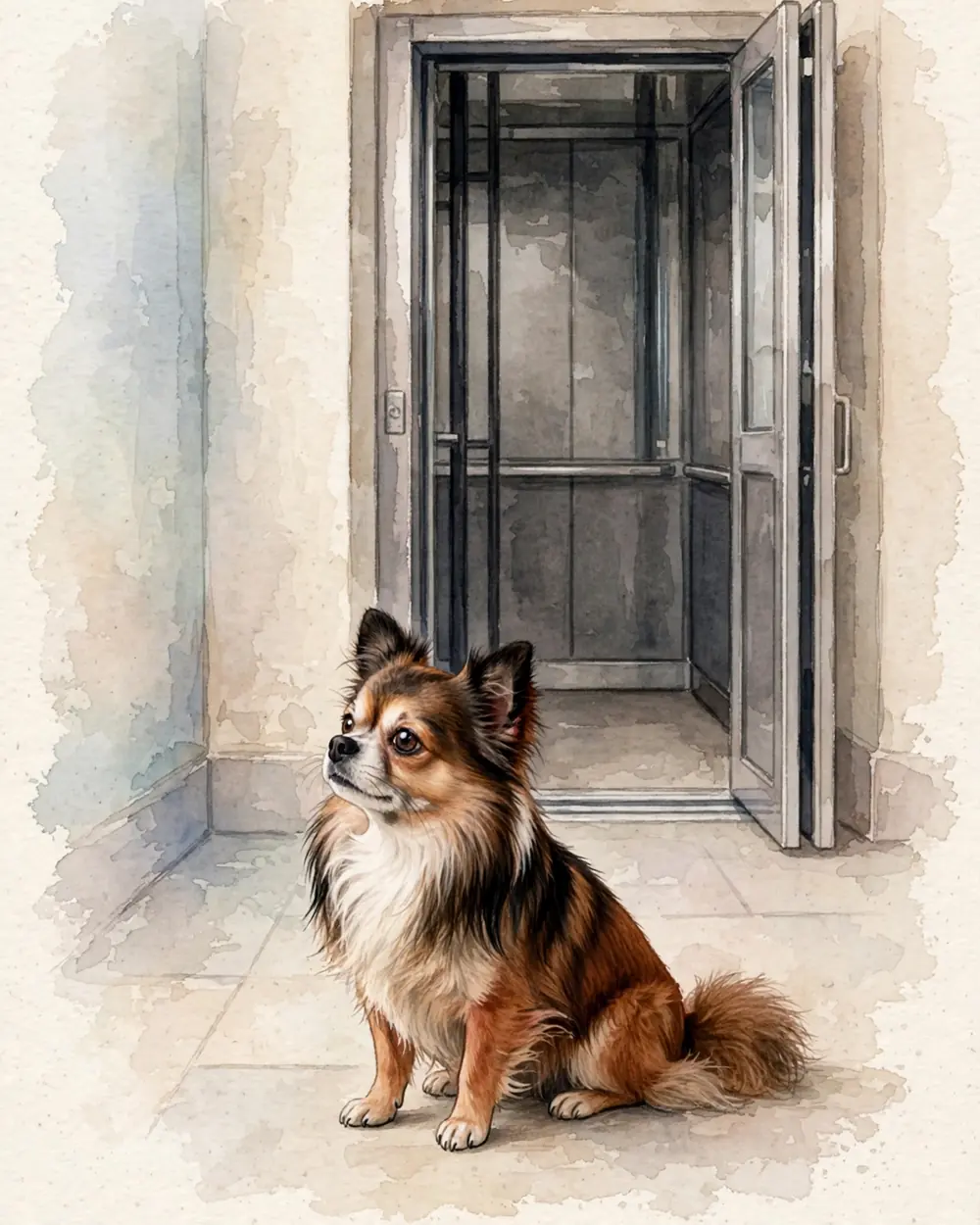
Pip does not do the lift. She does not do it the way she does not do the vacuum cleaner: completely, and with her whole body. So every day, Mum carries her up all three flights of stairs, and Pip rides up like the Queen.
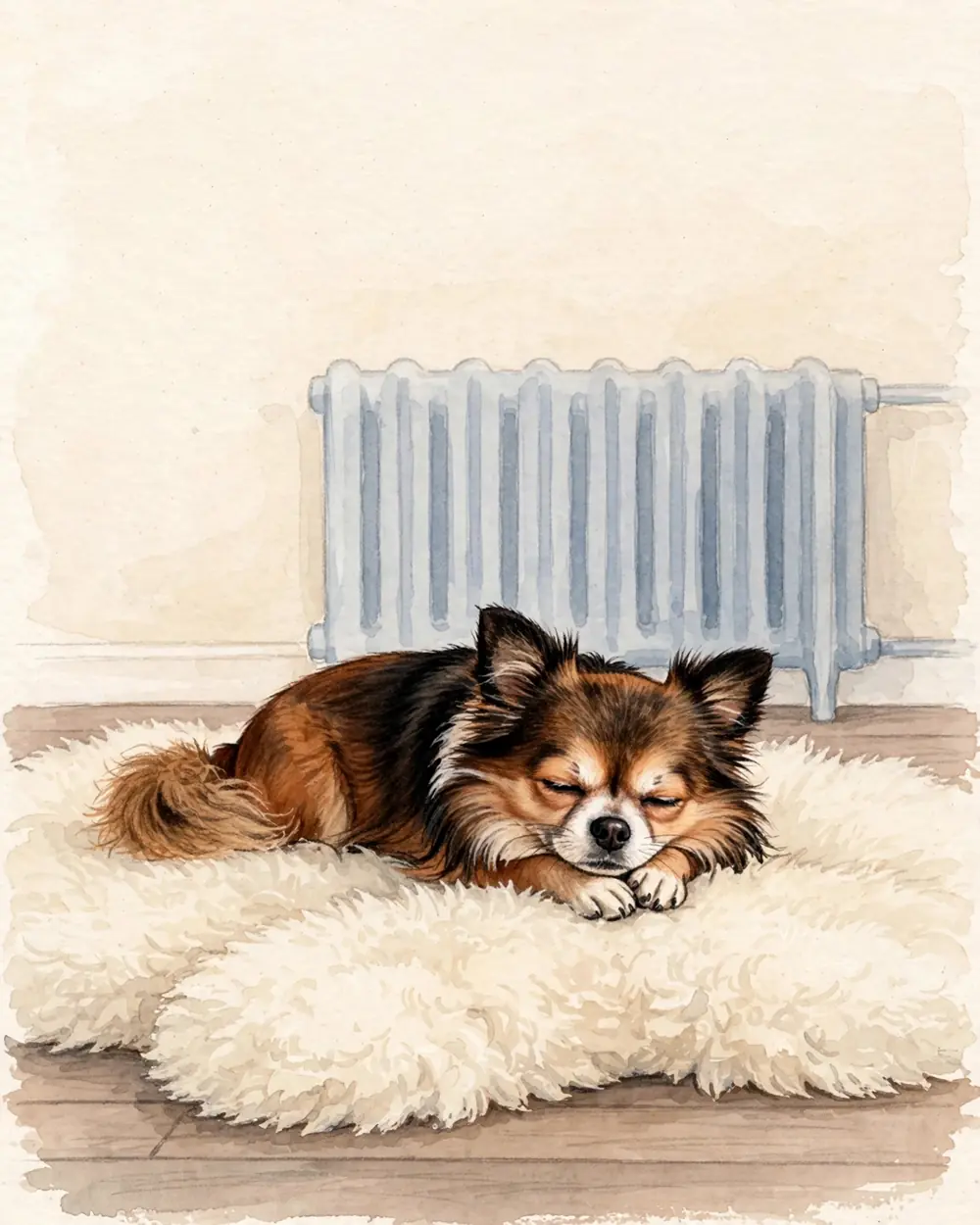
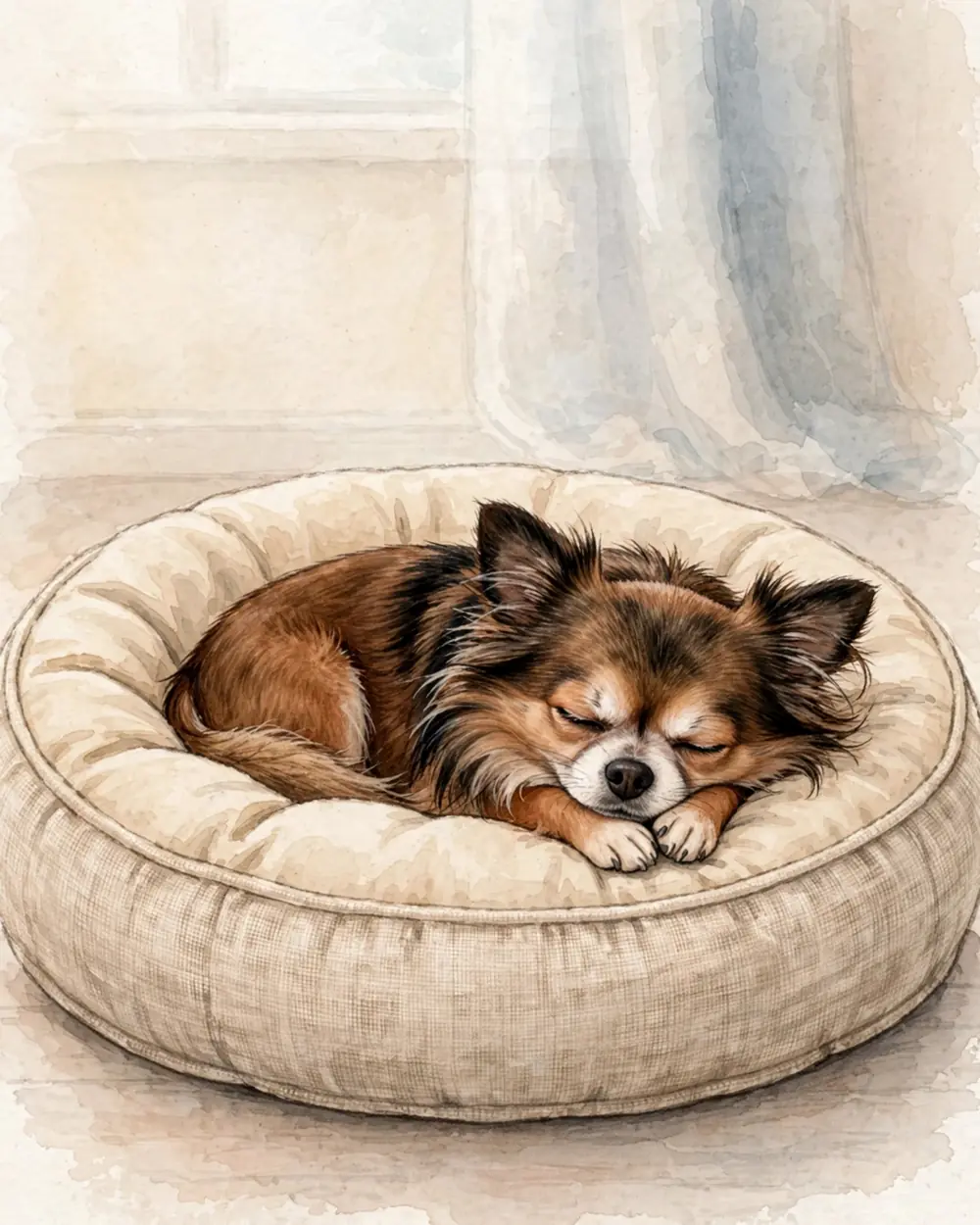
The sheepskin rug in front of the radiator — hers. The flat is on the third floor of an old building in the city, and within it, Pip owns specific things. This is the first of them, and the warmest. Nobody is returning anybody.
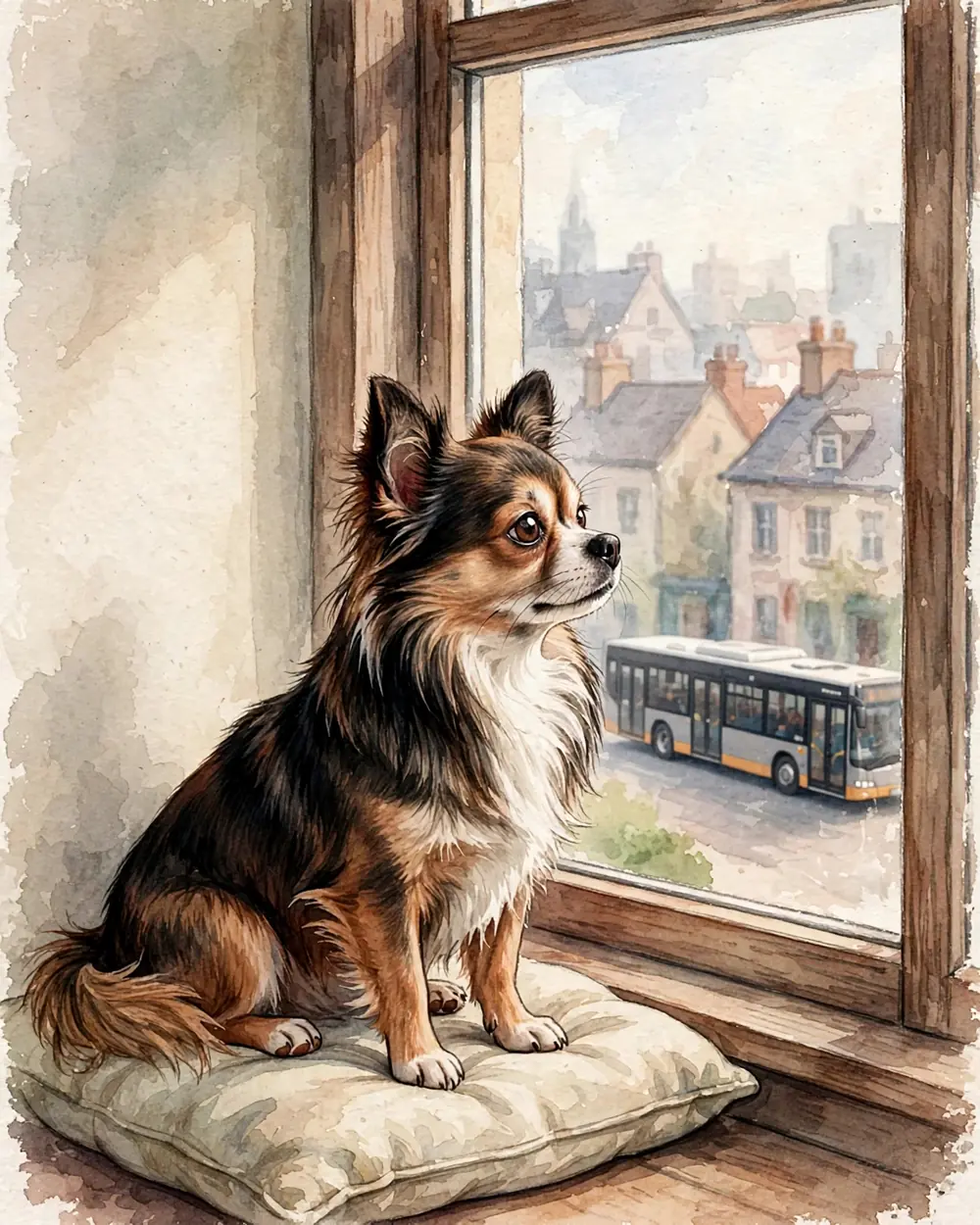
The cushion on the windowsill — hers, and it is command central, and the street knows it. From here she can watch the whole street, every bit of it, and she does. Two and a half kilos of dog, and every gram accounted for.
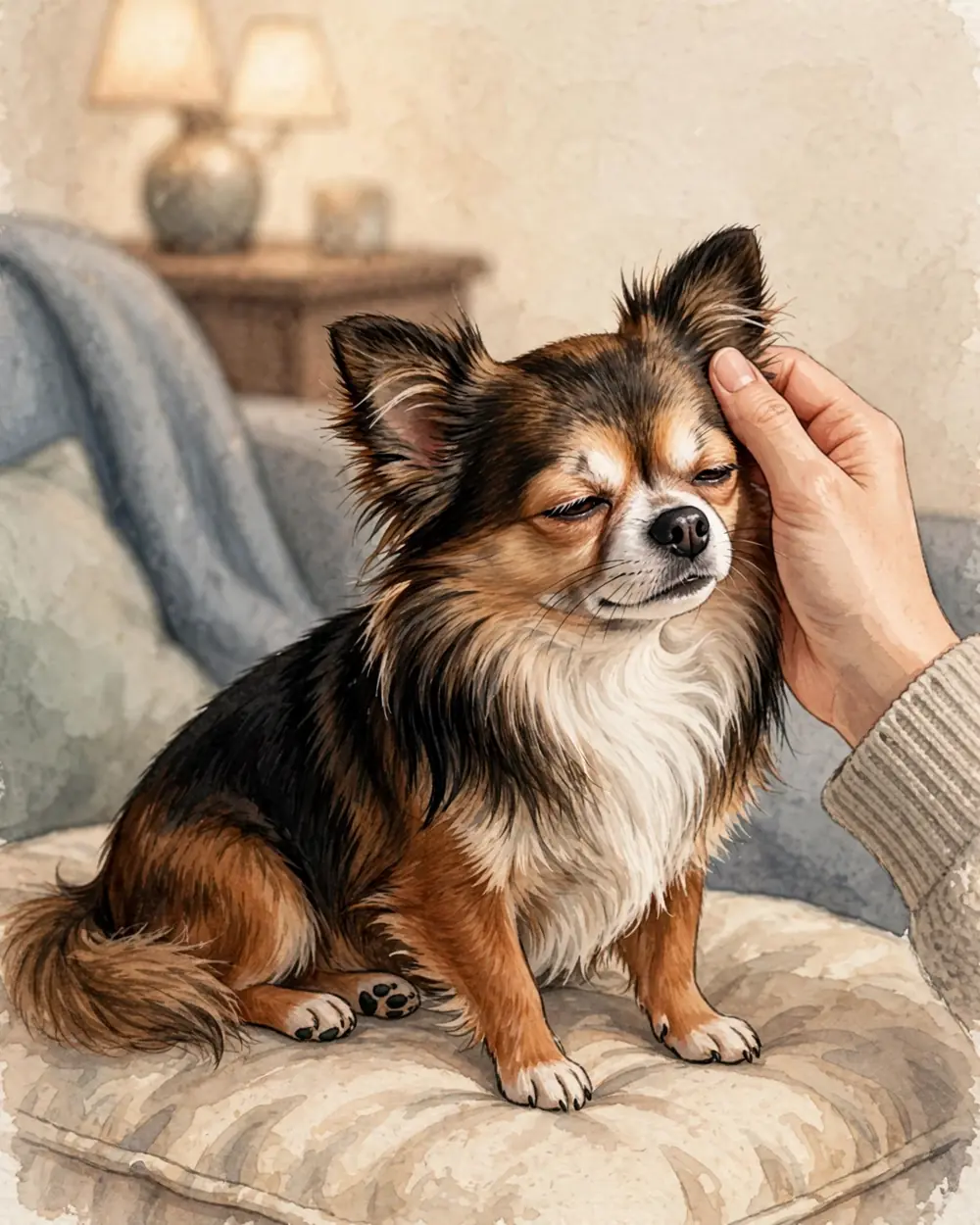
Sometimes, when she thinks nobody else is watching, she lets someone rub her ears. If you notice, she has to stop. That's the arrangement. A lion in a teacup, fiercely loyal to Mum — and secretly, very softly, this.
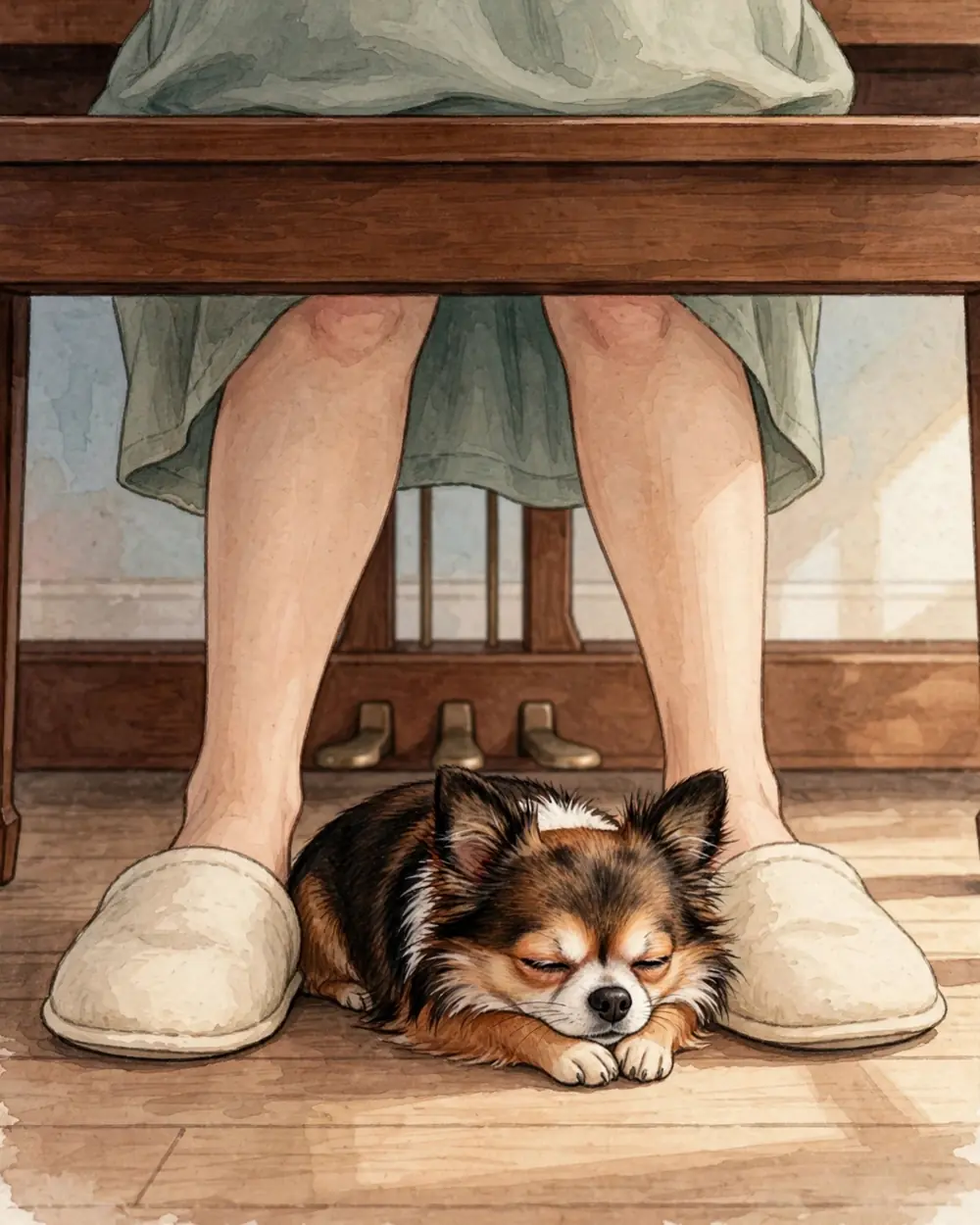
At four every afternoon, Mum plays the piano, and Pip lies under the piano stool right between her feet, where the sound comes up through the floor and into her ribs. Mum calls her "my little metronome" — her tail keeps time. Da-dum. Da-dum. This is my song too.
Chapter Three The Gnome, the Toast, the Bus
At seven every morning she sits on the windowsill cushion and barks exactly once at the first bus — once, exactly once, the most efficient bark in the city. Then her civic duty is discharged, and she returns to the important work of sleeping.
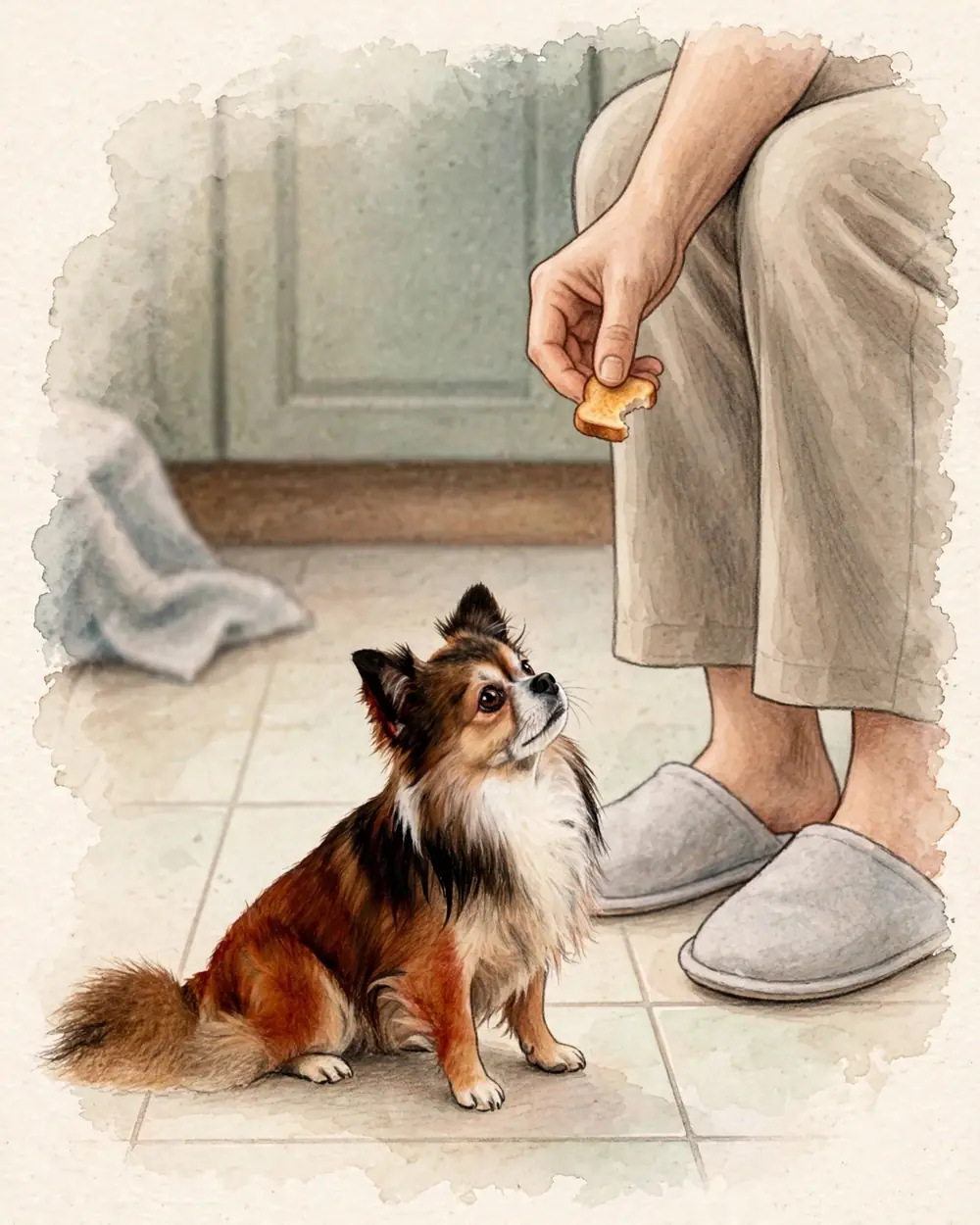
Warm toast crusts are one of her favourites, and her opinion of anyone eating toast without her is firm. Among her favourites, too: the sheepskin rug, the gnome with the red knitted hat, the windowsill cushion. But toast crusts are toast crusts.
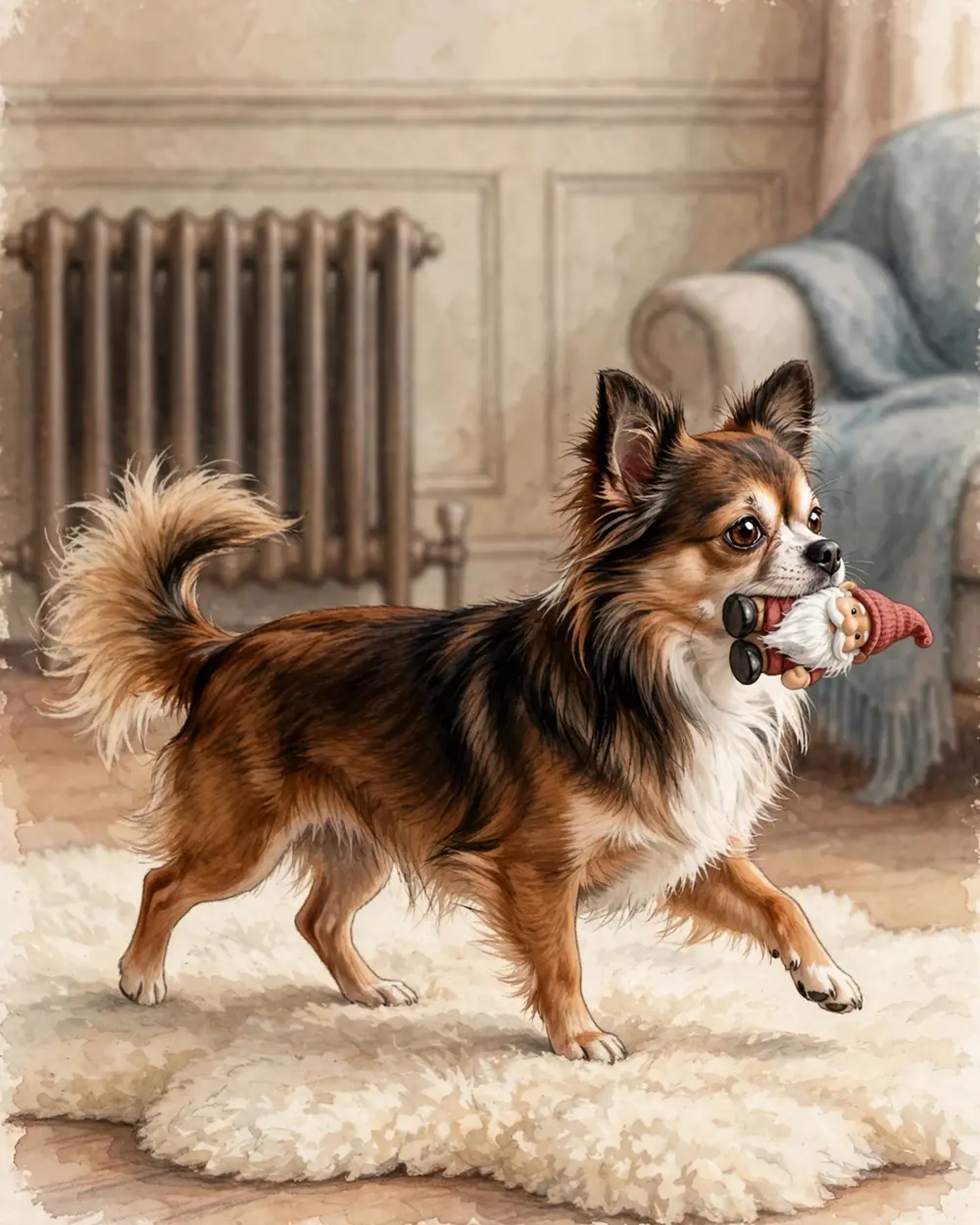
One Christmas, Mum made Pip a little gnome with a red knitted hat. Pip loves this gnome in a way that is difficult to witness. She carries it around by its beard, from room to room, like something she caught and intends to keep.
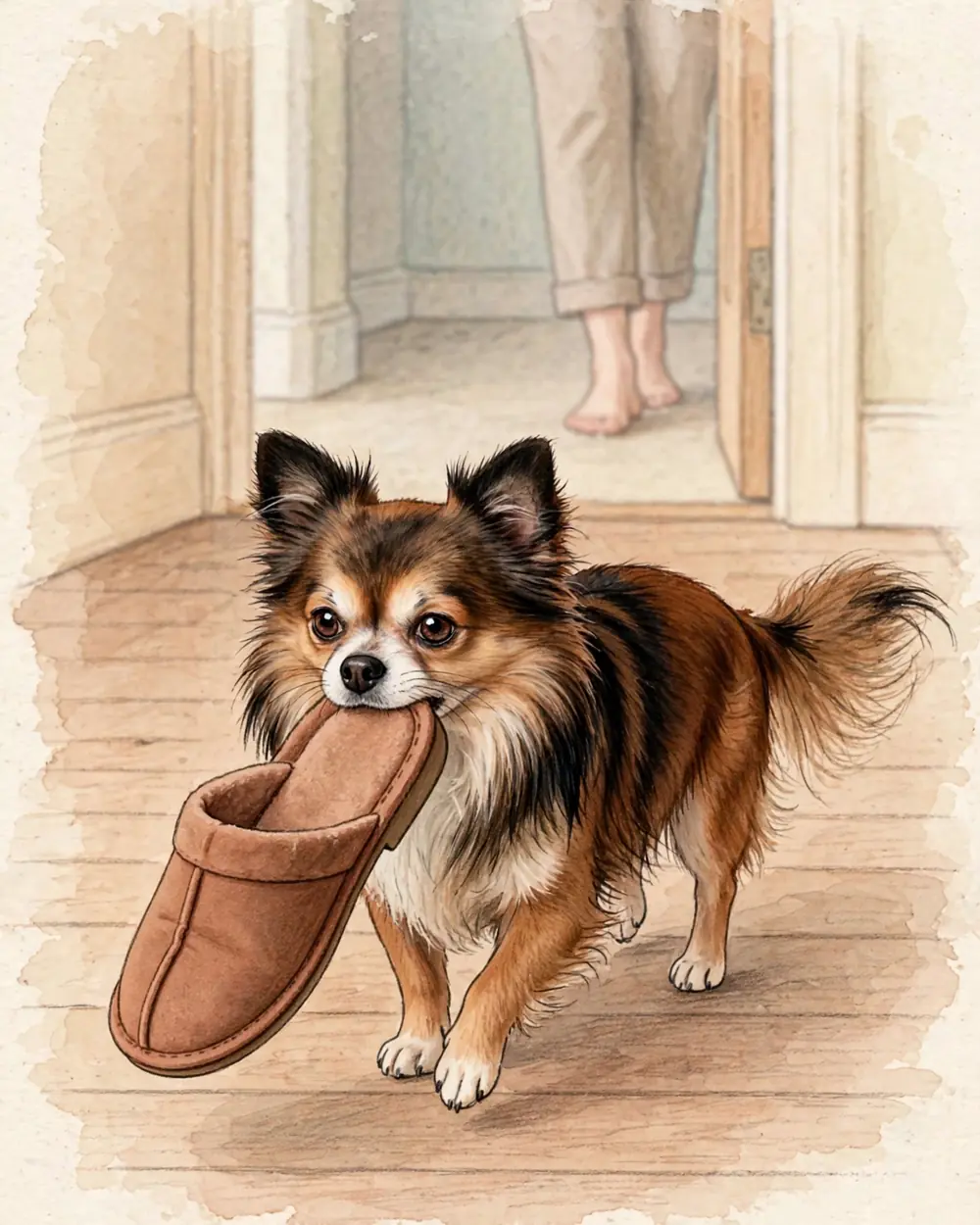
Nobody taught Pip to bring Mum her slippers. She simply worked out, entirely by herself, that slippers belong to Mum, and that a dog with a mouth and a sense of duty is fully equipped to deliver them. She worked it out the winter Mum had her hip replaced.
Chapter Four Good Evening, Madam Pip
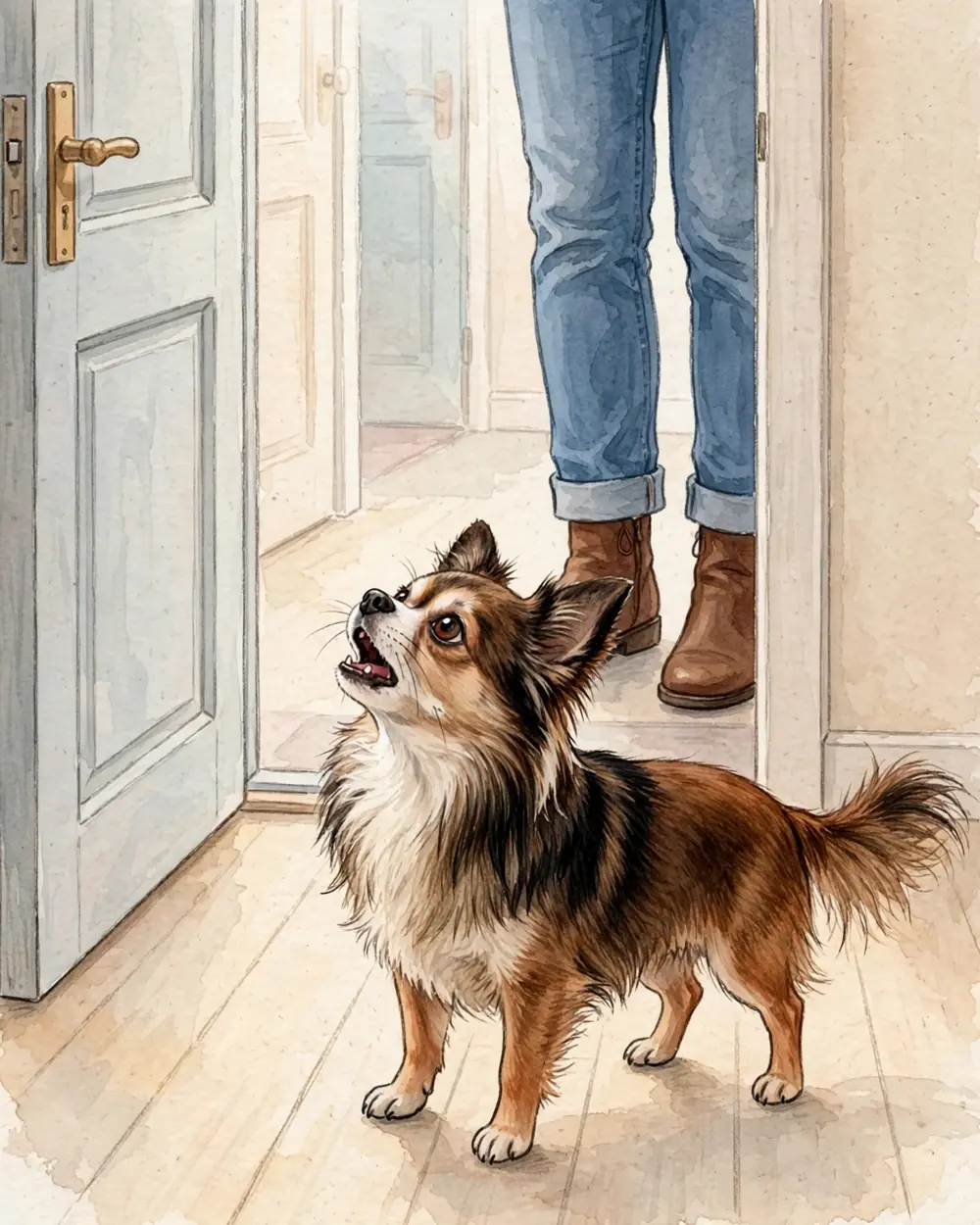
Anna visits every Sunday, and Pip barks at her for the first ten seconds — seven years of Sundays, no exceptions. You would think family would earn a fast track. The barking is the ticket. I know it is you. That is not the point.
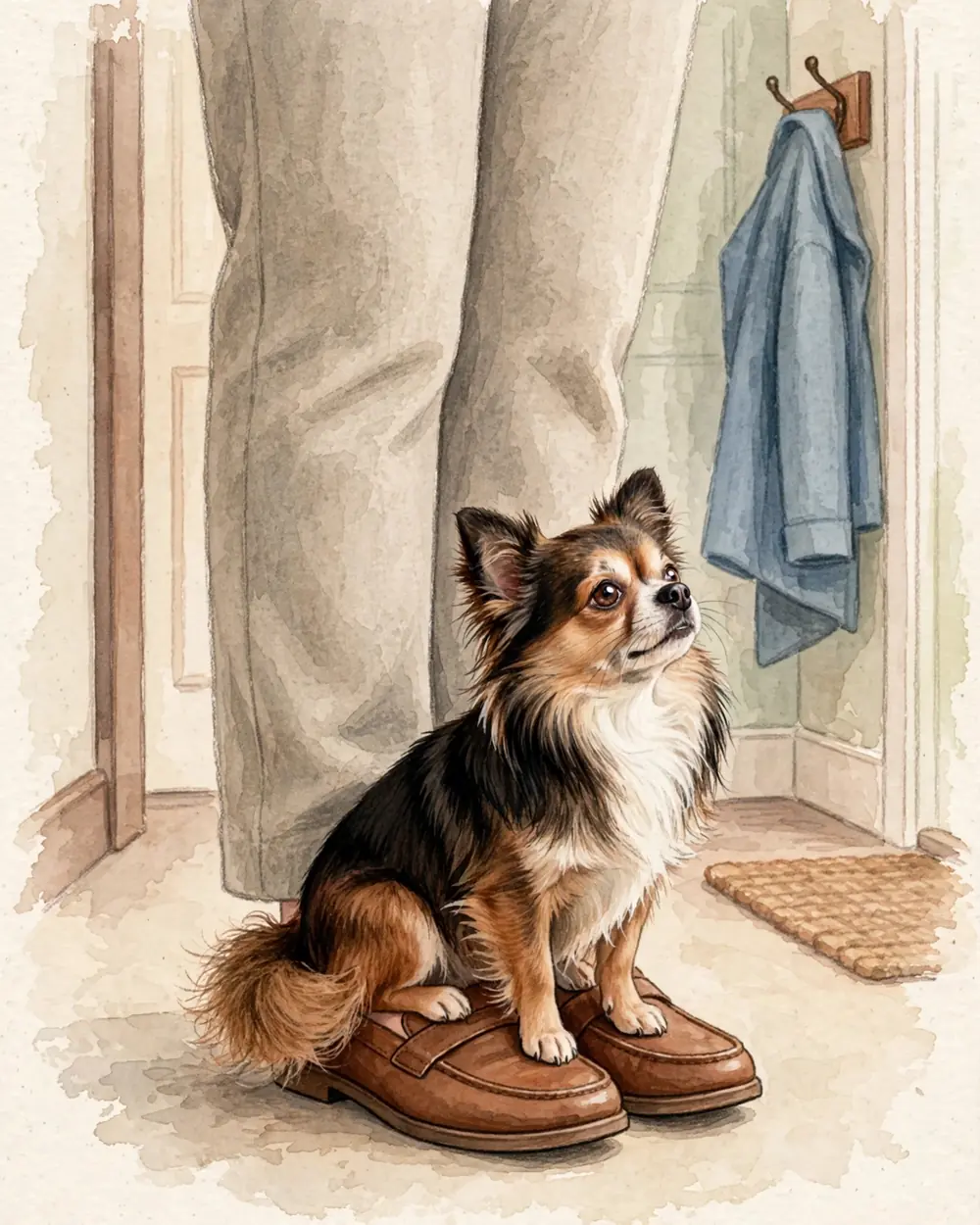
And then, having confirmed that it is only Anna, she climbs onto Anna's feet and sits there. Ten seconds of barking, then the feet. That is her arrangement with Anna, and it has never once varied.
And in the evening, she waits for Mr Okafor from across the landing. She barks at him in the morning — a formal greeting, deeply traditional. And every evening, he bows and says, "Good evening, Madam Pip." Pip receives this bow as her due.
Chapter Five Six Weeks, and Cardigans
The winter Mum had her hip replaced, Pip didn't leave her side for six weeks. She cannot fetch a hip. What she can do is be there, until being there is the treatment. This is where she lives. Same place.
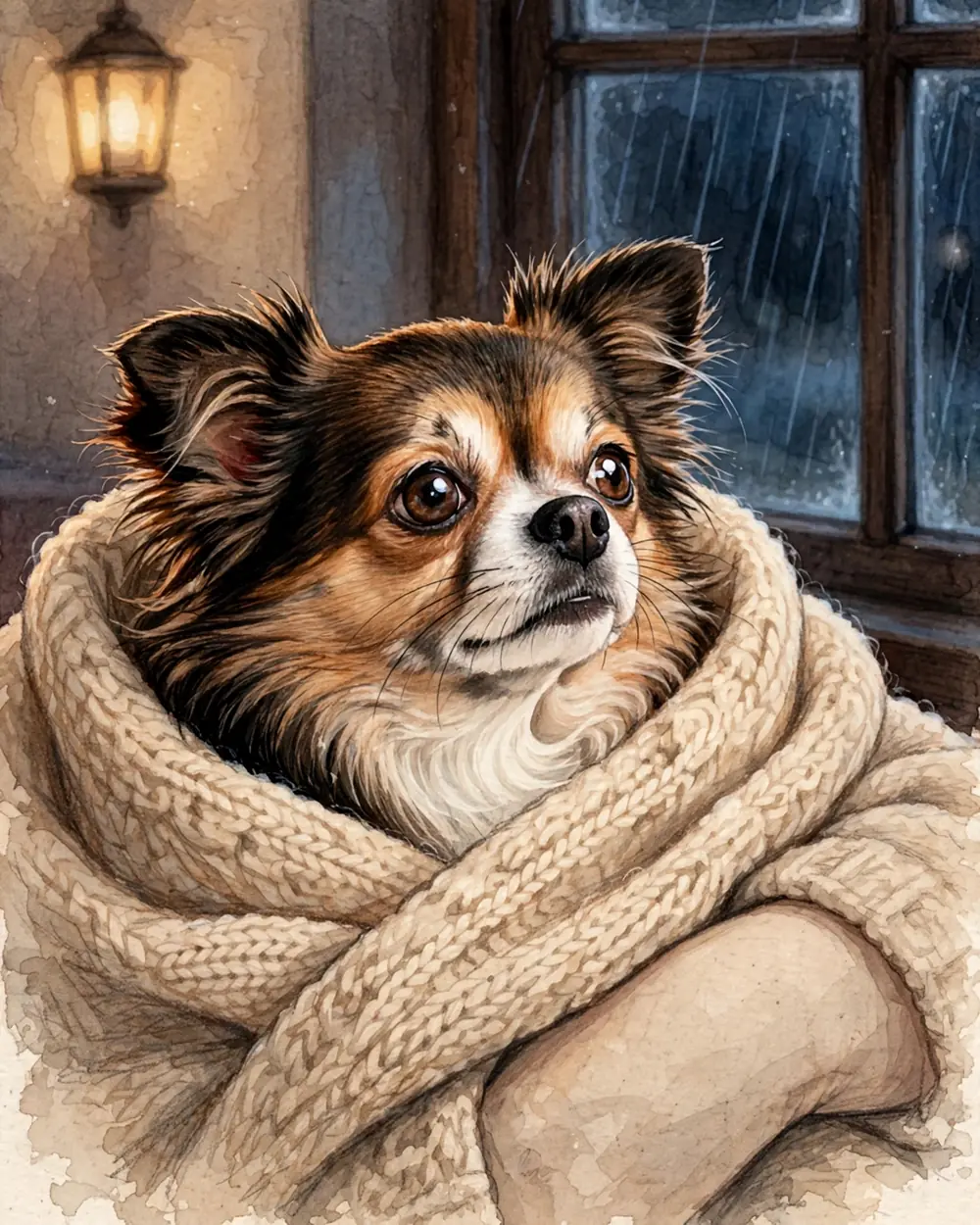
When the sky is broken, Pip has to be inside Mum's cardigan — entirely, folded into the wool with just her face out, riding out the thunder against Mum's chest. The dog who barks at everything is silent in the cardigan. The fear doesn't get a reply.
Chapter Six One Gold Bauble, One Perfect Snow
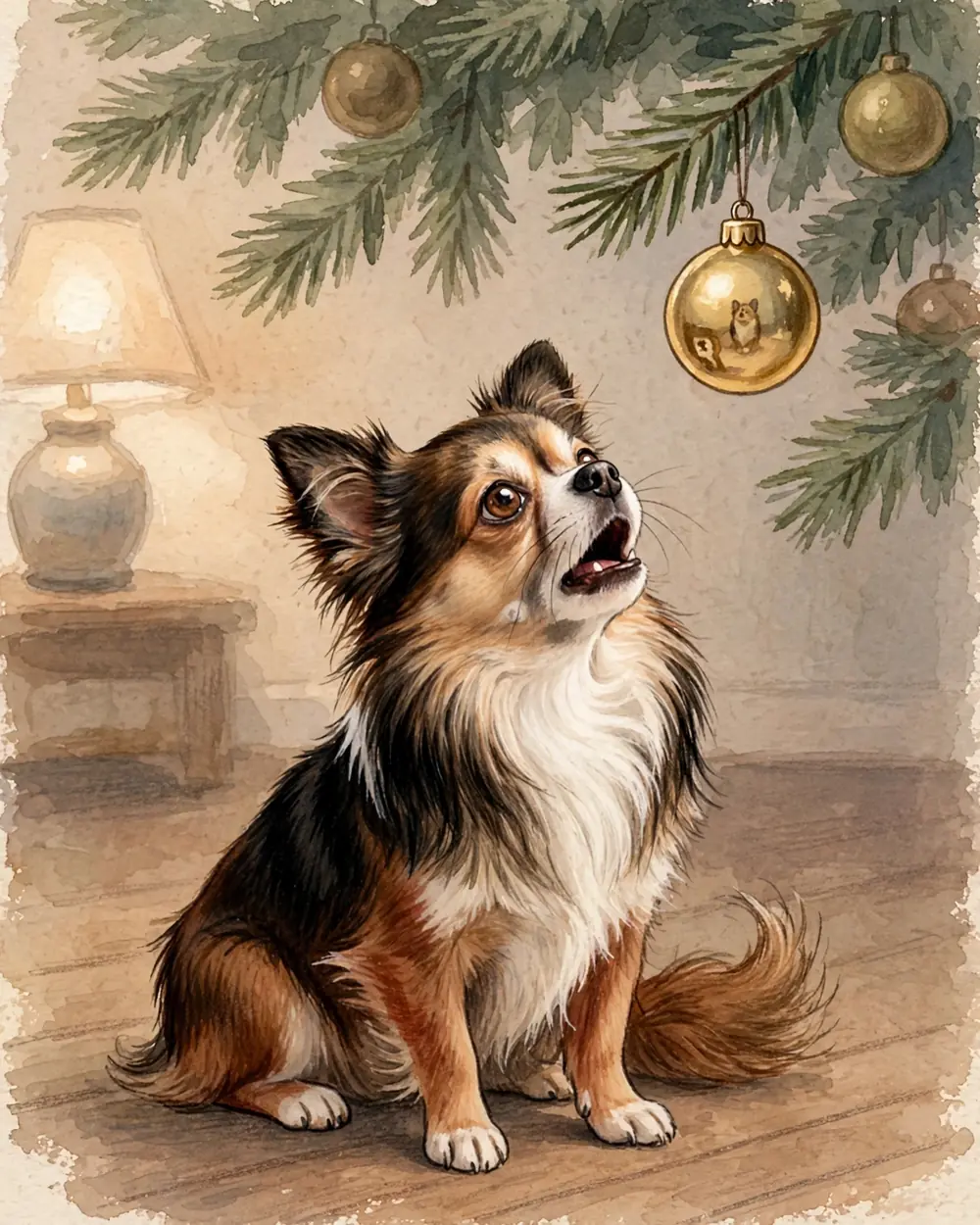
Her first Christmas with Mum, she discovered the tree. She sat in front of it for a whole evening, barking at one gold bauble on the lowest branch — her own reflection, round and gleaming and clearly up to something.
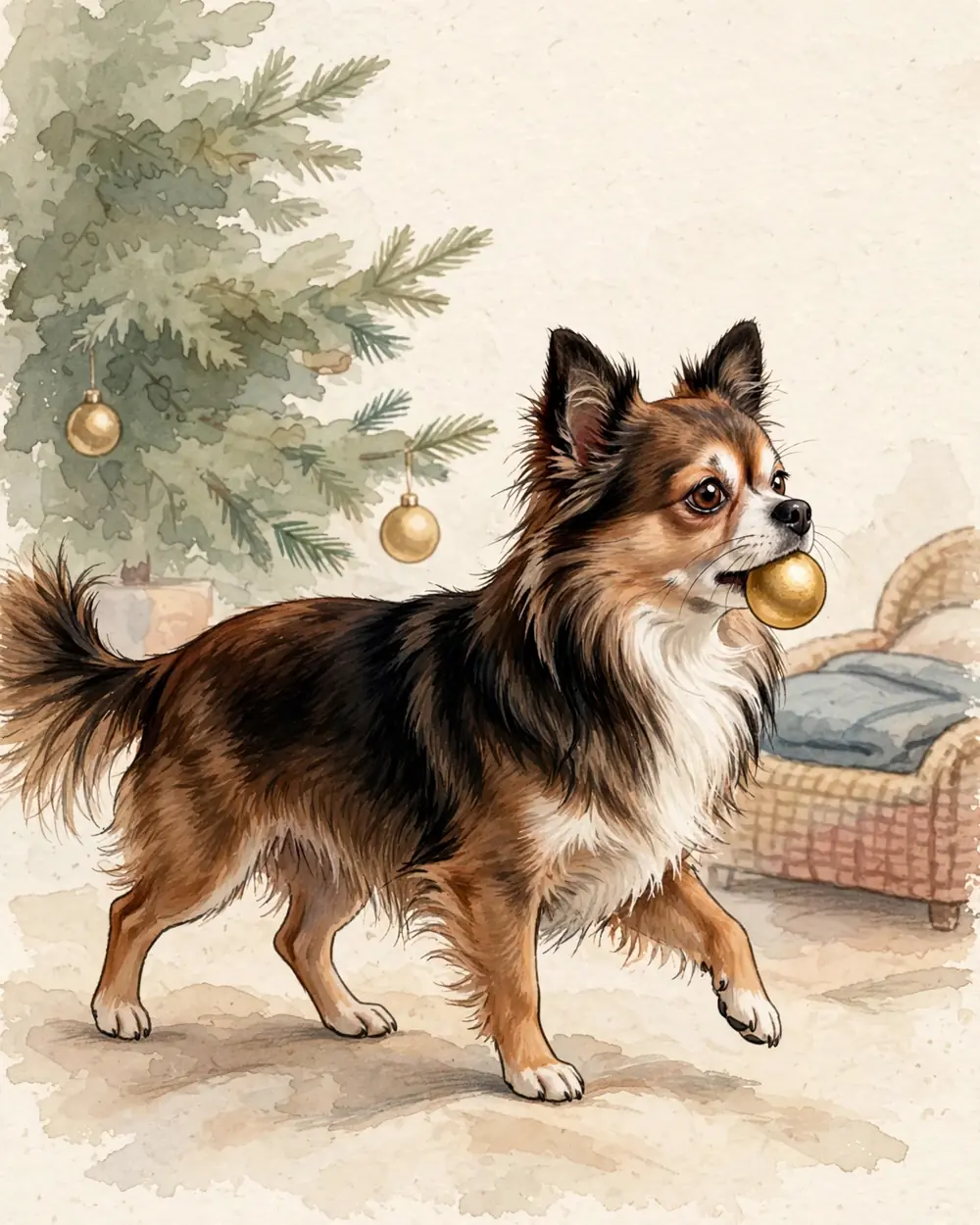
She won. Pip took the gold bauble off the lowest branch in her mouth and carried it to her bed. Not stolen — annexed. The bauble was hers since she first saw it; the carrying was just paperwork.
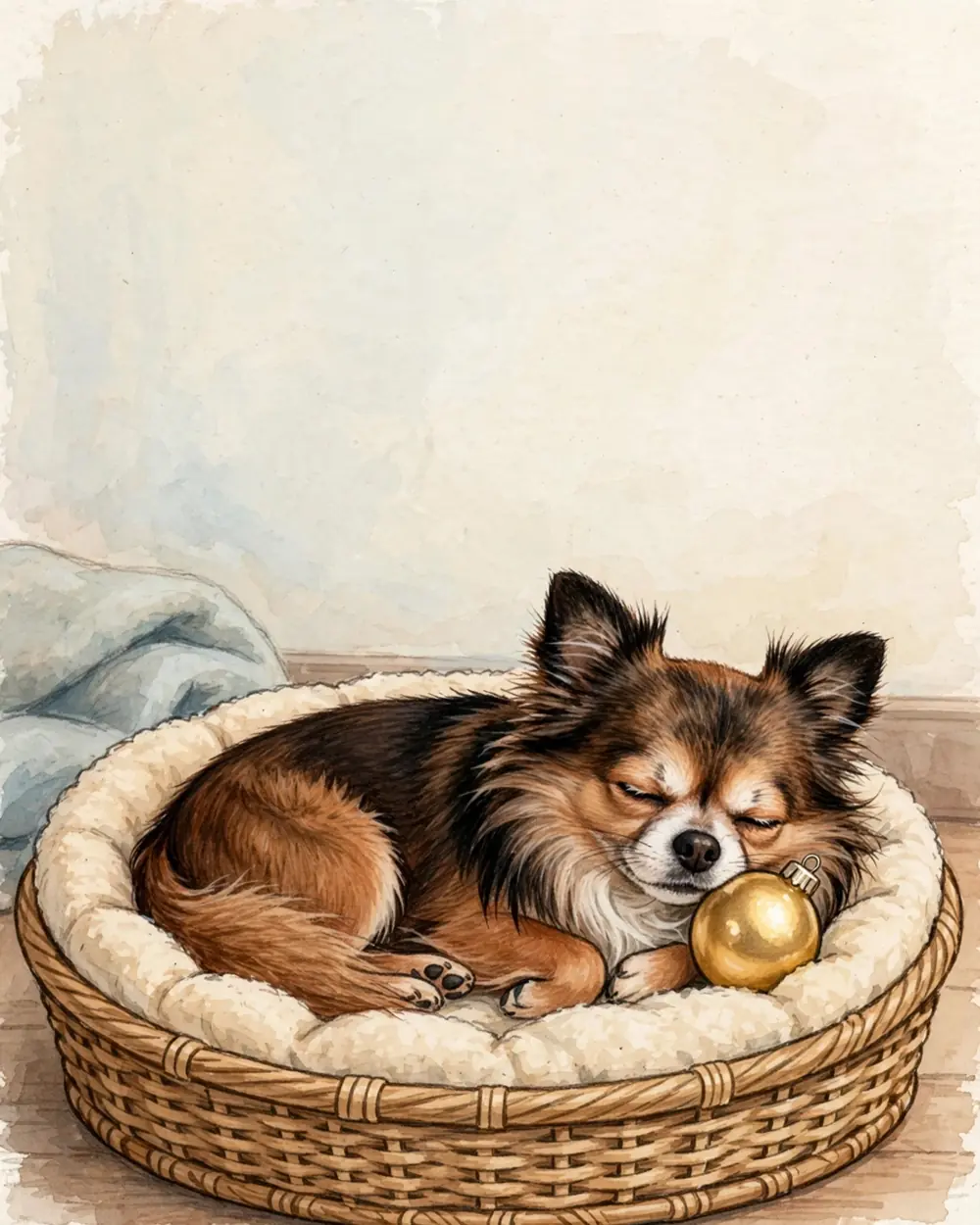
The bauble stayed there until February. That is not an interpretation; that is the official record. She came home seven years ago on a bus, barking at everything, given back twice. Now she has a gnome, a bauble, a sheepskin, a piano, and a Margaret.
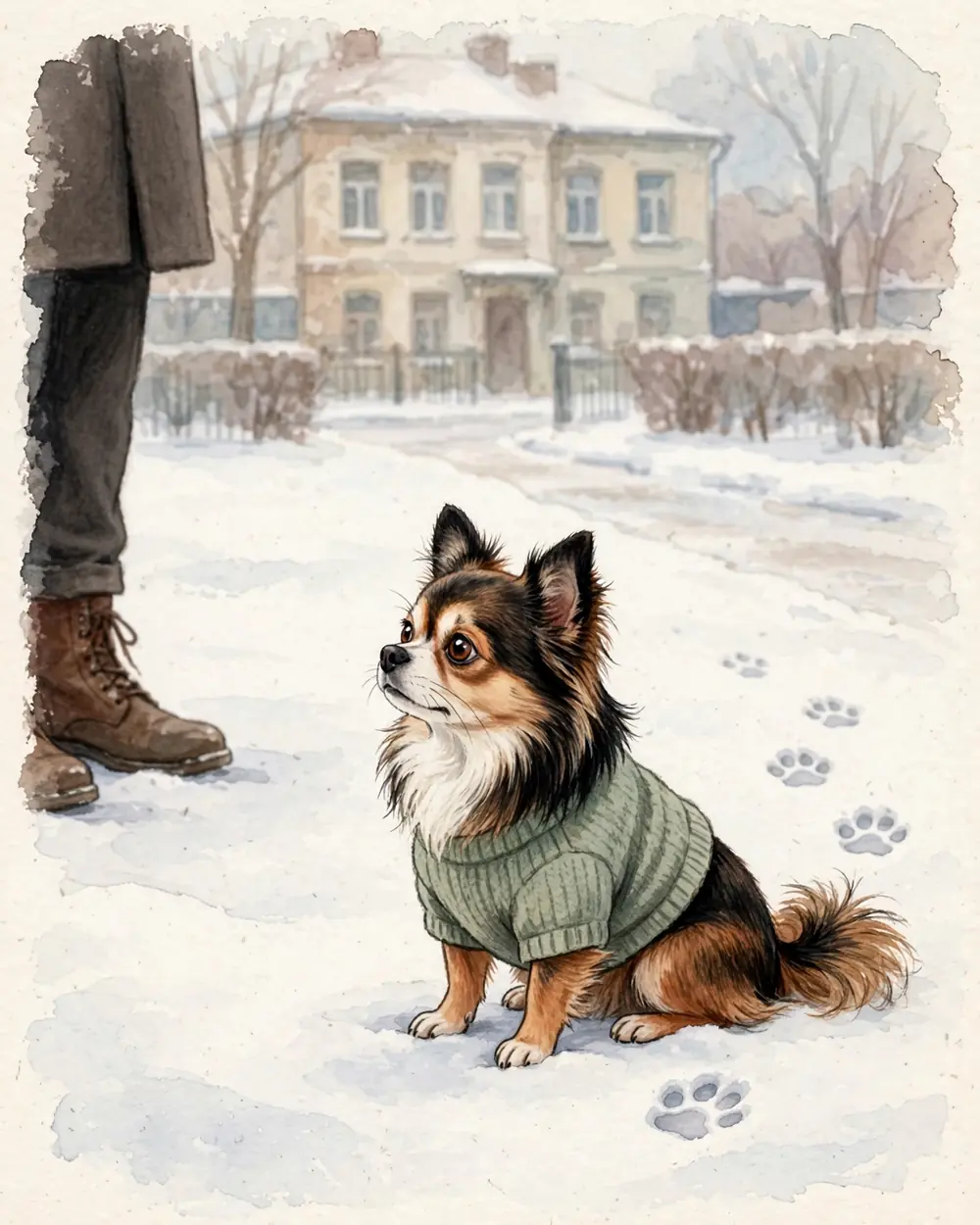
The best day was the first snow last winter. Mum put Pip in a little knitted jumper and they crossed to the tiny park. Pip took three steps into the snow, sat down, and refused to move. Cold. White. Everywhere. No.
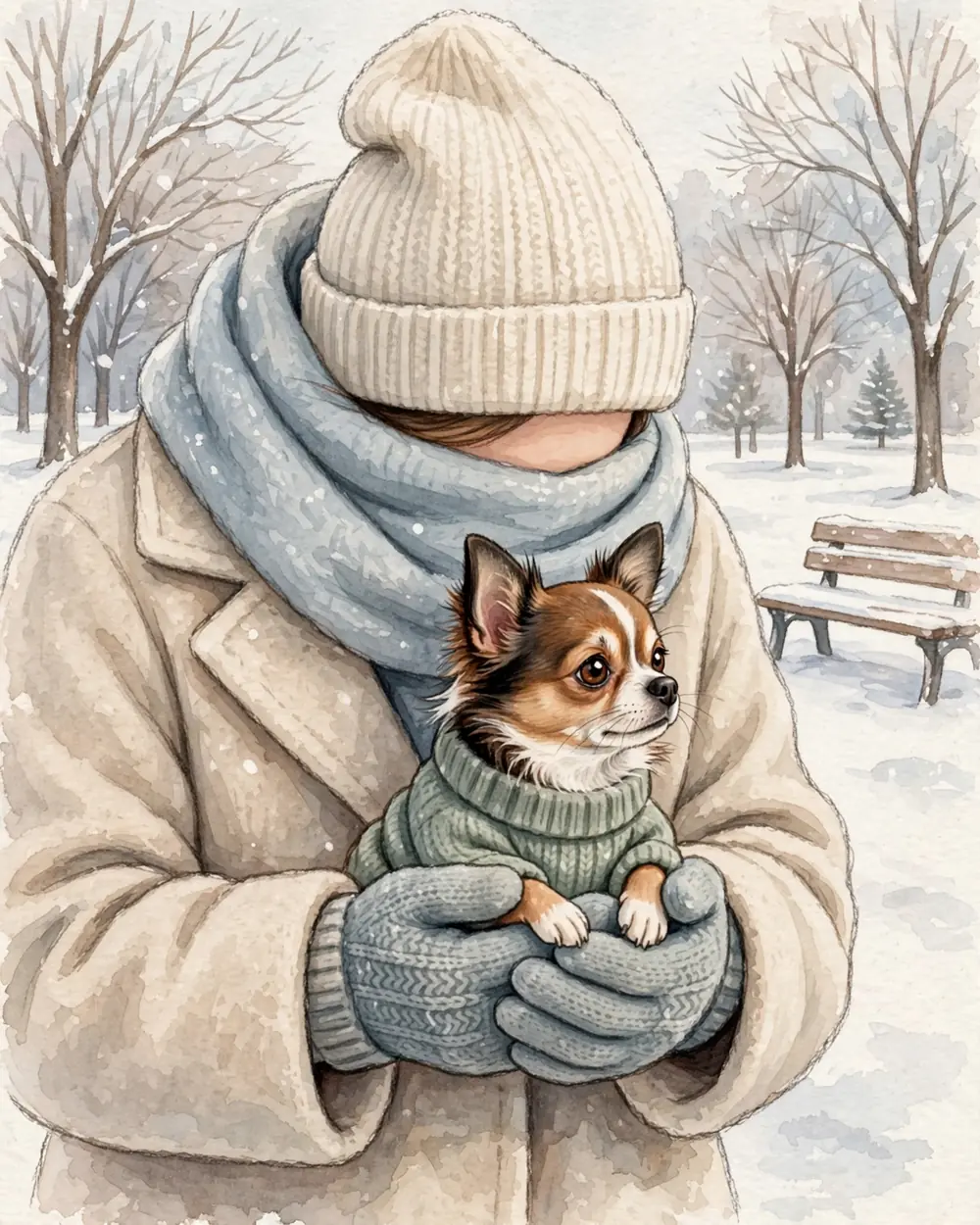
So Mum picked her up and carried her twice round the park, all the way round, twice, watching the snow from the safest possible position, which is a loved one's arms. They both came home pink-cheeked. Well, Mum was pink-cheeked. Pip was offended.
Closing Chapter If I Could Tell You One Thing
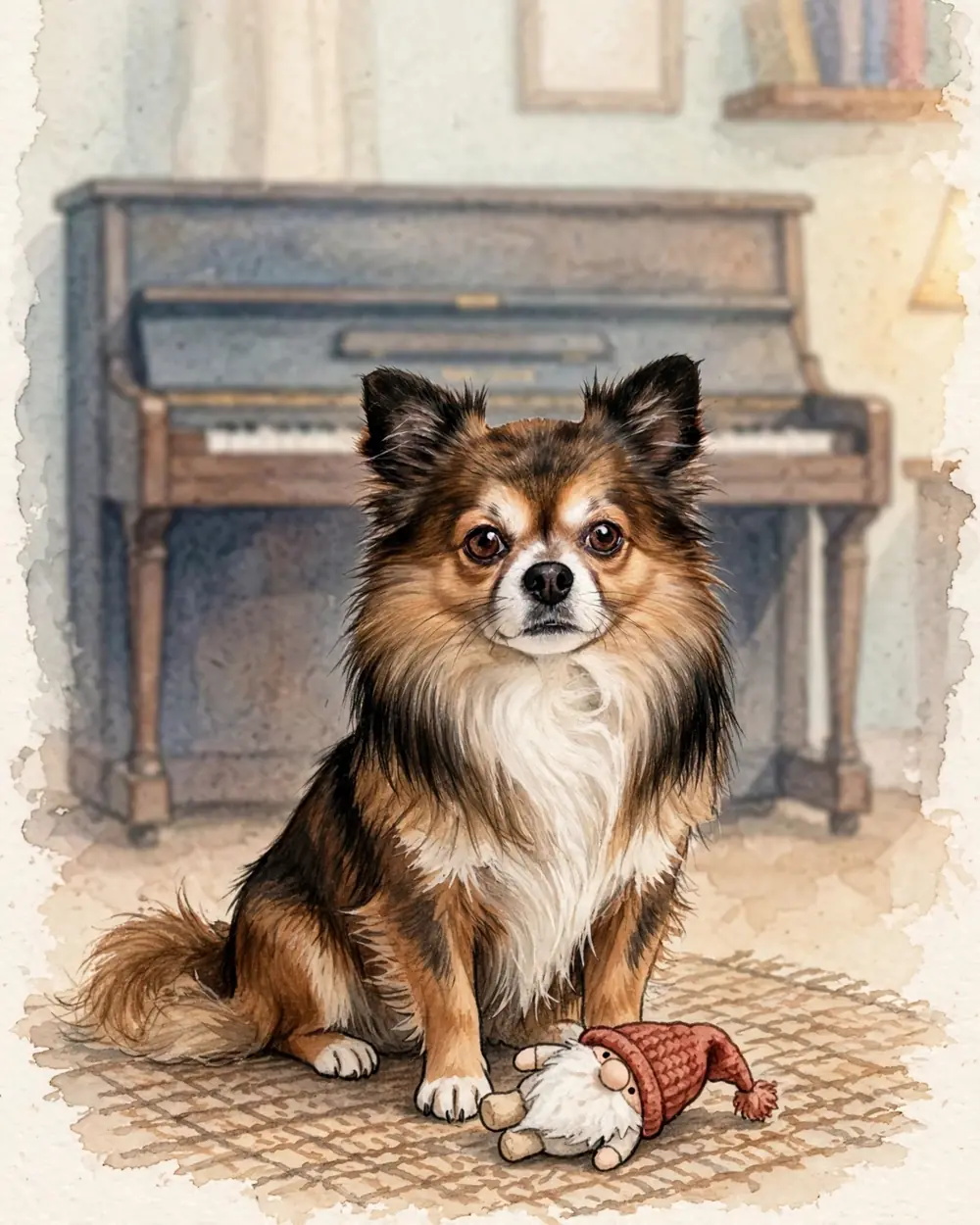
If I could tell you one thing: I was not too much. I was waiting for you. They returned me twice for barking at everything, because everything had never proved it was safe. On the number 12, you held the shoebox-sized carrier, and you did not give me back. I am two and a half kilos, and I am fiercely, entirely yours.
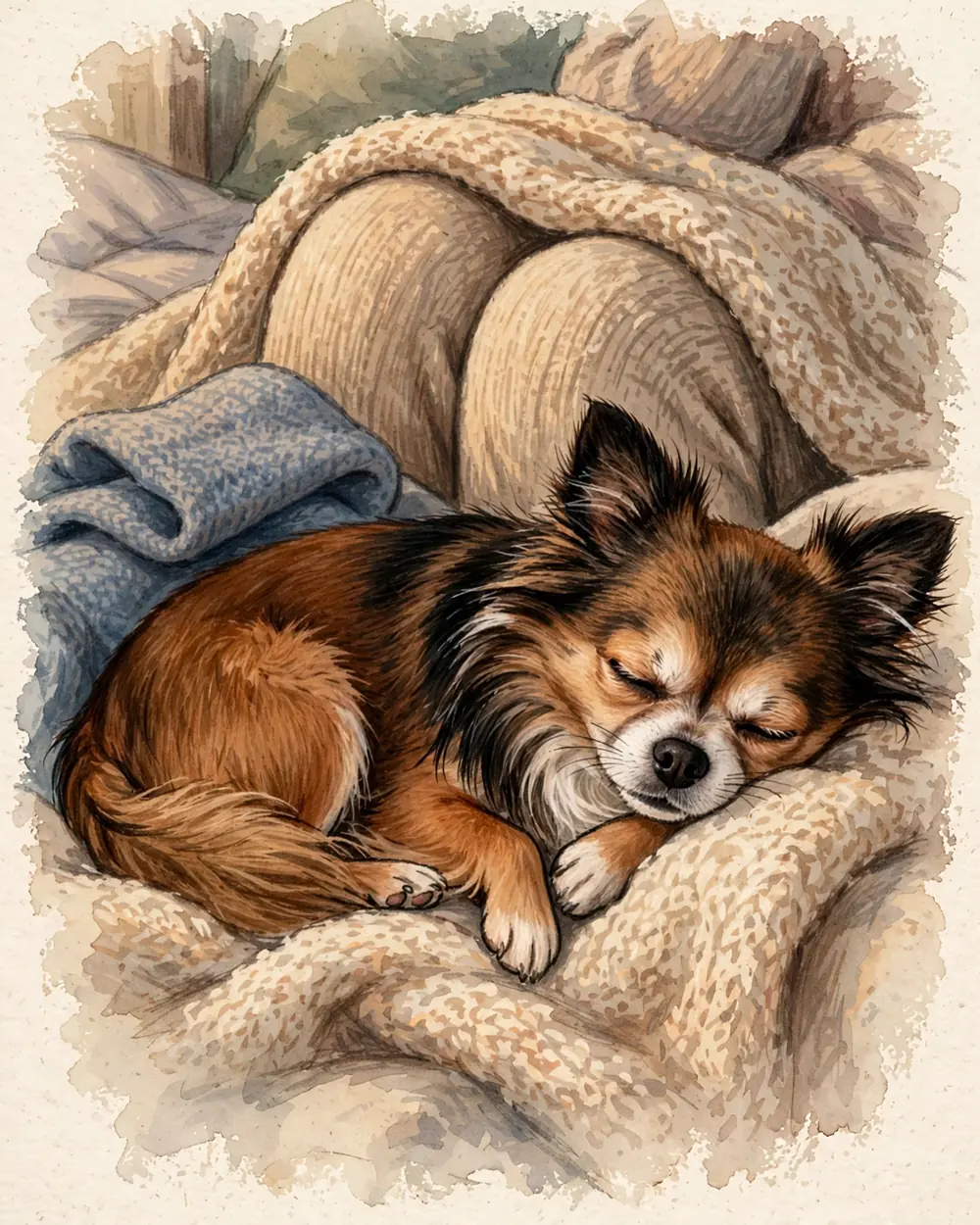
Here is the thing I want you to know, from the scarf onwards: the flat isn't quiet any more, and that is because of me. The flat has my one morning bark, my tail keeping time under the piano stool, my gnome, my bauble, my place in the crook of your knees. From the scarf onwards, I knew you were home.
— The End —